Raghav Chadha Calls Out “10-Minute Delivery Tyranny,” Urges Stronger Rights for Gig Workers
gig
In Parliament, Raghav Chadha condemns ultra-fast delivery culture and demands fair wages, safety, and social protection for gig economy workers.
Pune|09 December 2025: A recent address in the national Parliament has reignited debate over the working conditions faced by gig-economy workers in India. During the winter session, Raghav Chadha – representing the Aam Aadmi Party (AAP) – strongly condemned the demand for 10-minute delivery services by quick-commerce firms, calling the practice a “tyranny” that endangers the welfare of delivery riders, drivers, and service professionals who power the booming instant-delivery industry.
Chadha described these workers as the “invisible wheels of the Indian economy” – people behind instant-service notifications from apps, whether for groceries, food, rides or house-services. He reminded the House that behind every “your order is on its way” alert is a person – often a father, husband, brother or son -working under immense pressure. While customers enjoy convenience, the delivery agents often contend with grueling deadlines, hazardous working conditions, and uncertain incomes.
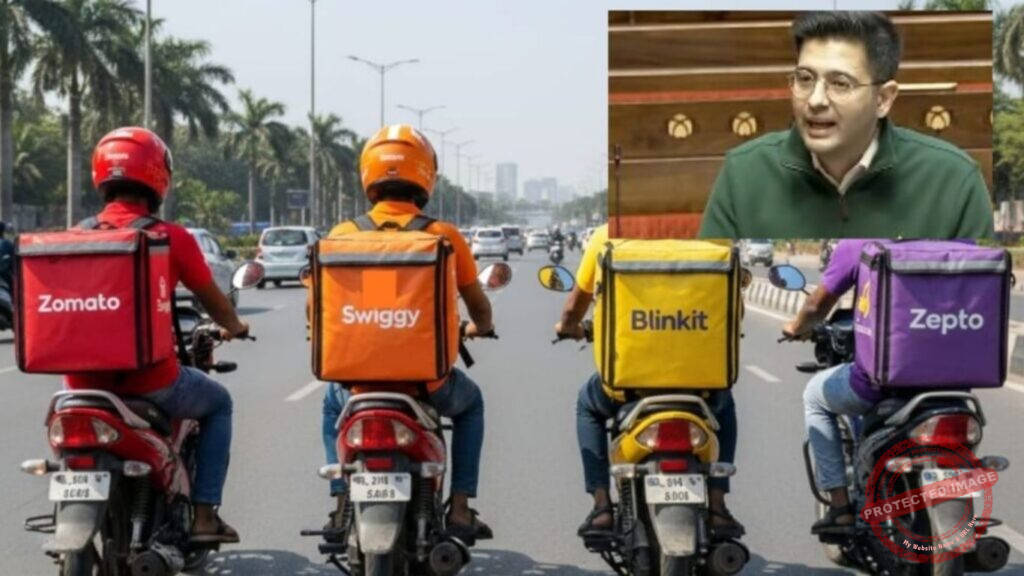
He highlighted the harsh reality: riders for services like Zomato, Swiggy, Blinkit, Zepto – along with drivers from ride-hailing platforms such as Ola and Uber, plus home-service professionals from firms like Urban Company – are being forced to over-speed, flout traffic norms or ride under dangerous conditions just to meet unrealistic delivery targets. The consequences, he argued, can be fatal.
Beyond speed and safety concerns, Chadha drew attention to systemic issues: lack of social security, absence of health or accident insurance, no guaranteed minimum wage, and no protection against arbitrary deactivation or rating-based penalties. In many cases, a single low rating or customer complaint can wipe out weekly or monthly earnings. Such precariousness, he cautioned, is worse than what regular daily-wage workers endure.
In light of these concerns, he demanded that the government enact regulations to safeguard gig workers’ rights, including fair pay, social protection benefits, and a halt to ultra-fast 10-minute delivery promises that incentivize reckless work. Calling extreme delivery timelines “cruelty”, he urged legislation aimed at ensuring dignity, fairness and safety for millions of gig workers across India.
Critics of the quick-commerce model say the problem is not limited to worker exploitation. Recent research into gig-based food-delivery platforms highlights how algorithmic management, rating-based incentives, and time-pressure combine to create invisible burdens on workers – psychological stress, extended working hours, and lack of agency. Many workers resort to risky decisions like overspeeding or ignoring traffic rules simply to stay “on time.”
As the winter session continues, the spotlight is now on the government and regulators to respond. With the gig workforce expanding rapidly – powering everything from groceries to home-services — the demand for protective labour laws has never been more urgent. The call to end “10-minute tyranny” could mark a turning point in how India balances digital convenience with human dignity.
Follow us On Our Social media Handles :
Instagram
YouTube
Facebook
Twitter