Follow the Constitution or Leave India, Supreme Court Tells Meta and WhatsApp

Supreme
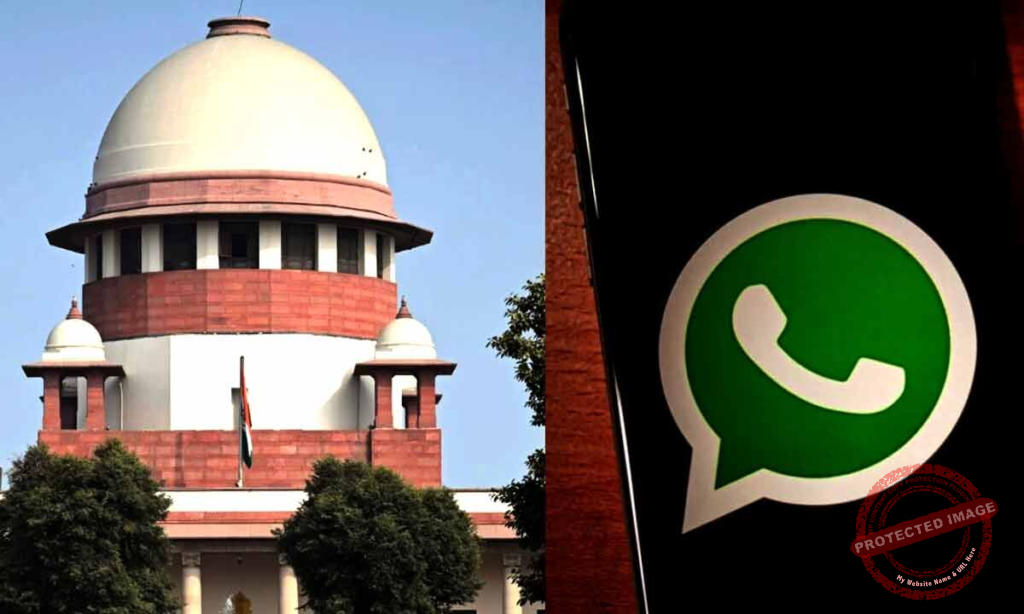
The Supreme Court sharply criticised Meta and WhatsApp over their data-sharing policy, refusing permission to share user information and asserting that citizens’ privacy rights under the Constitution cannot be compromised.
New Delhi | 03 February, 2026:The Supreme Court on Tuesday strongly reprimanded Meta and its messaging platform WhatsApp over their data privacy practices, warning the companies that failure to comply with India’s constitutional framework could leave them with no option but to exit the country.
Hearing petitions related to WhatsApp’s 2021 privacy policy, the court made it clear that no user data would be allowed to be shared under the current framework. “We will not permit you to share even a single word of data. You cannot play with the constitutional rights of this country. If you cannot follow the Constitution, you should leave India,” the bench observed.

The bench, comprising Chief Justice Surya Kant and Justices Joymalya Bagchi and Vipul Pancholi, underlined that citizens’ right to privacy is non-negotiable. It said the court would not allow any compromise on personal data protection in the name of business interests.
The dispute has been ongoing for several years, with the Union government raising objections to WhatsApp’s updated privacy policy, alleging that user data was being shared for commercial purposes without informed consent. In November 2024, the Competition Commission of India imposed a penalty of ₹213 crore on Meta for violating competition norms linked to data usage.
During the hearing, Solicitor General Tushar Mehta, representing the Union government, criticised the policy, stating that personal data was not only being collected but also monetised. “User data is being exploited for profit,” he told the court.
The Supreme Court expressed concern over the complexity of privacy terms. “The language of these conditions is so cleverly drafted that an ordinary citizen cannot understand them. This is a sophisticated way of stealing private data,” the bench remarked, asking Meta and WhatsApp to submit a written assurance on data protection.
Appearing for Meta, senior advocate Arun Kathpalia argued that complete data sharing does not take place and only limited information is used. However, the court remained unconvinced and reiterated that data-sharing cannot violate fundamental rights.
The bench also directed that the Ministry of Information Technology be added as a party to the case and said it would pass an interim order on February 9.
Follow us On Our Social media Handles :
Instagram
Youtube
Facebook
Twitter
Also Read- Pune