Amit Shah Launches Bharat Taxi: India’s First Cooperative-Based Taxi Service Empowering Drivers Nationwide
India
Union Minister Amit Shah launches Bharat Taxi, India’s first cooperative-based taxi service, empowering drivers with ownership, safety, and higher earnings.
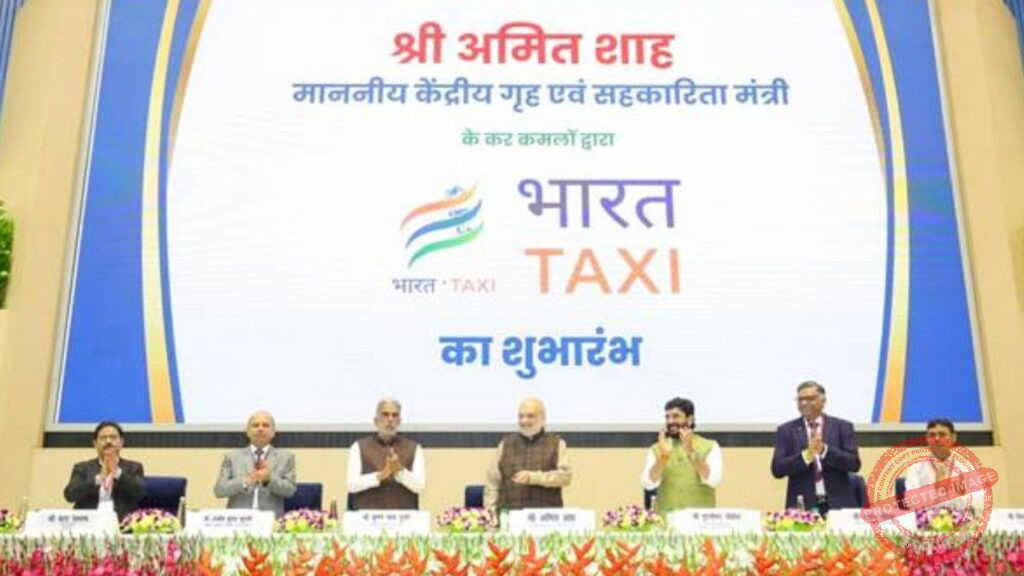
Pune | 07 February, 2026 – Union Home and Cooperation Minister Amit Shah on Thursday launched Bharat Taxi, India’s first-ever cooperative-based taxi service, marking a significant milestone in the country’s transport and cooperative sectors. The initiative aims to empower taxi drivers by making them owners rather than commission-based workers, fundamentally changing the traditional aggregator-driven business model. The launch event, held in New Delhi, witnessed participation from over 1,200 taxi drivers, referred to as “Sarathis,” representing different states across the country. Several senior officials, including Union Minister of State for Cooperation Krishan Pal Gurjar, Member of Parliament Murlidhar Mohol, and Cooperation Secretary Dr. Ashish Kumar Bhutani, were also present at the event.
Speaking at the launch, Amit Shah emphasized that Bharat Taxi is built on the cooperative philosophy promoted by Prime Minister Narendra Modi, where individuals working at the grassroots level are given ownership and decision-making power. He said the initiative would operate on the principle of “Sahakar se Samriddhi” (Prosperity through Cooperation), ensuring that the income generated by taxi services directly benefits the drivers themselves. Shah noted that unlike existing private aggregators, Bharat Taxi would not be owned by a corporate entity but by the drivers who operate the vehicles, ensuring fair income distribution and long-term financial stability.
Drawing parallels with India’s successful cooperative institutions such as Amul and IFFCO, Shah explained how cooperative ownership can transform lives. He highlighted that women livestock rearers associated with Amul earn substantial incomes today due to cooperative empowerment and expressed confidence that Bharat Taxi could achieve similar success in the mobility sector. According to Shah, drivers will retain the majority of their earnings, with only around 20 percent of profits being reinvested into the cooperative’s operations, eliminating exploitative commission structures common in private taxi platforms.
The Bharat Taxi service will include four-wheelers, three-wheelers, and two-wheelers, ensuring wide accessibility across urban and semi-urban areas. A major focus of the initiative is women’s safety and employment through the Sarathi Didi program, which allows female passengers to book rides with women drivers. Shah described this as a crucial step toward ensuring safer travel for women while also promoting financial independence and employment opportunities for female drivers.
To strengthen its operational framework, Bharat Taxi has entered into Memorandums of Understanding (MoUs) with several prominent institutions, including Delhi Traffic Police, Delhi Metro Rail Corporation, Airport Authority, IFFCO Tokio Insurance, and State Bank of India. These partnerships are expected to improve service efficiency, integrate institutional travel needs, and provide insurance and financial services to driver-owners, further reinforcing the cooperative ecosystem.
Industry experts believe that Bharat Taxi could disrupt India’s urban mobility sector by offering a sustainable alternative to existing aggregator models that often prioritize profits over driver welfare. With rising concerns over driver exploitation, fluctuating commissions, and passenger safety, the cooperative-based approach could offer a balanced solution benefiting both drivers and commuters. As India’s transportation needs continue to grow, initiatives like Bharat Taxi may play a key role in shaping inclusive and equitable mobility solutions.
In conclusion, the launch of Bharat Taxi represents a transformative shift in India’s taxi industry by placing ownership, dignity, and financial security in the hands of drivers. Backed by strong institutional support and a proven cooperative framework, the initiative has the potential to redefine urban transport while promoting social and economic empowerment nationwide. If implemented effectively, Bharat Taxi could emerge as a model for cooperative-driven innovation across multiple sectors in India.
Follow us On Our Social media Handles :
Instagram
Youtube
Facebook
Twitter
Also Read- Pune