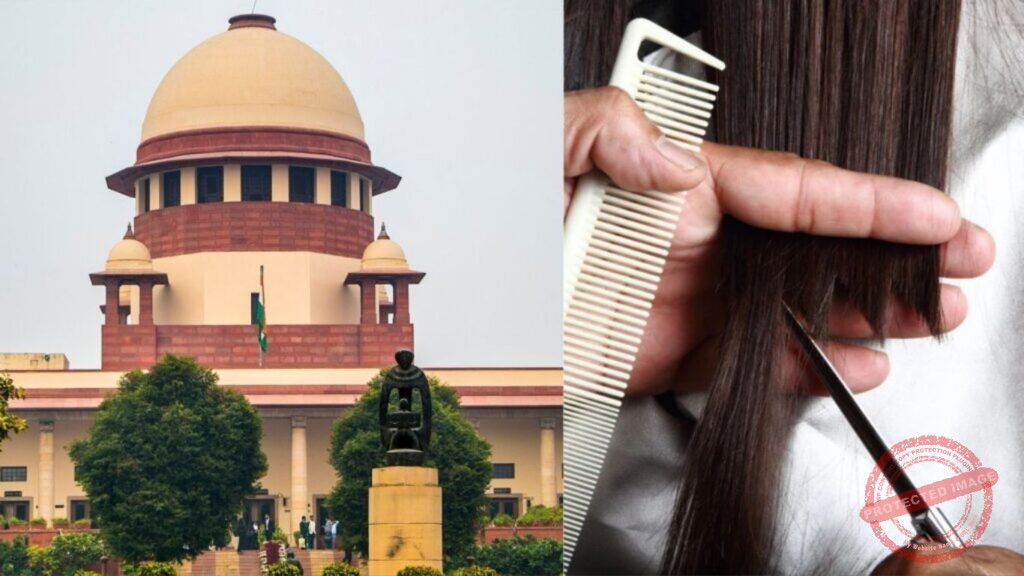
Supreme Court Slashes ₹2 Crore Haircut Compensation to ₹25 Lakh in High-Profile ITC Maurya Case
Court
Supreme Court reduces ₹2 crore compensation in ITC Maurya haircut case to ₹25 lakh, stressing the need for reliable proof in high-value consumer claims.
Pune | 10 February 2026 – The Supreme Court of India has put an end to a long-running and widely discussed consumer dispute by reducing a ₹2 crore compensation award to ₹25 lakh in a case involving a model and the luxury hotel ITC Maurya in New Delhi. The ruling is being viewed as a significant moment in consumer law, emphasizing that compensation—especially in high-value claims—must be backed by strong, reliable, and verifiable evidence rather than assumptions or speculative losses.
The case dates back to April 2018, when model Aashna Roy visited the salon at ITC Maurya for a haircut before an important professional interview. According to her complaint, the hairstylist ignored her specific instructions and cut her hair much shorter than requested. Roy claimed that the haircut adversely affected her professional image, caused emotional distress, and resulted in a loss of modeling assignments. She later approached the consumer court alleging deficiency in service and negligence, seeking substantial compensation for the alleged damage to her career.
In 2021, the National Consumer Disputes Redressal Commission (NCDRC) ruled in her favor and awarded a compensation of ₹2 crore, citing mental trauma, loss of confidence, and professional setbacks. The unusually high compensation amount attracted nationwide attention and sparked debate about proportionality and evidentiary standards in consumer disputes, particularly those involving subjective losses such as career impact and emotional distress.
Challenging the NCDRC’s order, ITC Maurya moved the Supreme Court, arguing that the compensation was excessive and unsupported by concrete proof. In an earlier round of hearings, the apex court set aside the ₹2 crore award and directed a fresh evaluation, observing that compensation must be grounded in material evidence and rational assessment. Despite this, the consumer commission again reaffirmed the original amount, leading to a renewed appeal before the Supreme Court.
In its final judgment delivered in February 2026, a Supreme Court bench held that while there was indeed a deficiency in service, the evidence presented to justify compensation running into crores was insufficient. The court noted that many documents relied upon to claim loss of income and professional opportunities were unverified photocopies and lacked clear linkage between the haircut incident and the alleged long-term career damage. The judges stressed that damages cannot be awarded based on conjecture, emotional appeal, or hypothetical loss.
Consequently, the Supreme Court ruled that the ₹25 lakh already paid to the complainant would stand as the final compensation, effectively reducing the award by 87.5%. The court clarified that consumer protection laws are meant to provide fair relief for genuine grievances but should not be used to impose disproportionate financial liability without strong evidentiary backing.
Legal experts believe this judgment will have far-reaching implications for consumer litigation in India. It sets a clear precedent that while service providers can be held accountable for lapses, claims involving loss of reputation, career prospects, or emotional distress must meet a high threshold of proof. The ruling is also expected to influence future disputes involving luxury services, hospitality businesses, and personal grooming sectors.
Industry stakeholders have welcomed the verdict, viewing it as a move toward balancing consumer rights with judicial fairness. At the same time, consumer advocates note that the decision does not dilute the right to seek redress but reinforces the need for credible documentation and causation when claiming large sums.
In conclusion, the ITC Maurya haircut case stands as a landmark example of how Indian courts are refining the boundaries of consumer compensation. The Supreme Court’s decision underscores that while justice must be compassionate, it must also be rooted in evidence, proportionality, and legal discipline.
Follow us On Our Social media Handles :
Instagram
Youtube
Facebook
Twitter
Also Read- Pune