Pune District Gears Up for Nationwide Census; Digital House-Listing Phase From May 16
Pune
Pune district administration kicks off preparations ahead of the nationwide Census, with digital house-listing set to begin on May 16 and extensive training for enumerators.
Pune | 17 February, 2026- Pune district has initiated large-scale preparations for the upcoming nationwide Census exercise, with the crucial house-listing and housing census phase scheduled to commence on May 16 and continue until June 15, 2026. This marks the first major operational step in the decennial population count and signals a significant shift toward digital governance, as the entire process will be conducted using mobile-based applications instead of traditional paper forms. District authorities have begun coordinating across administrative levels to ensure smooth execution of what is considered one of the largest data-collection exercises in the country.
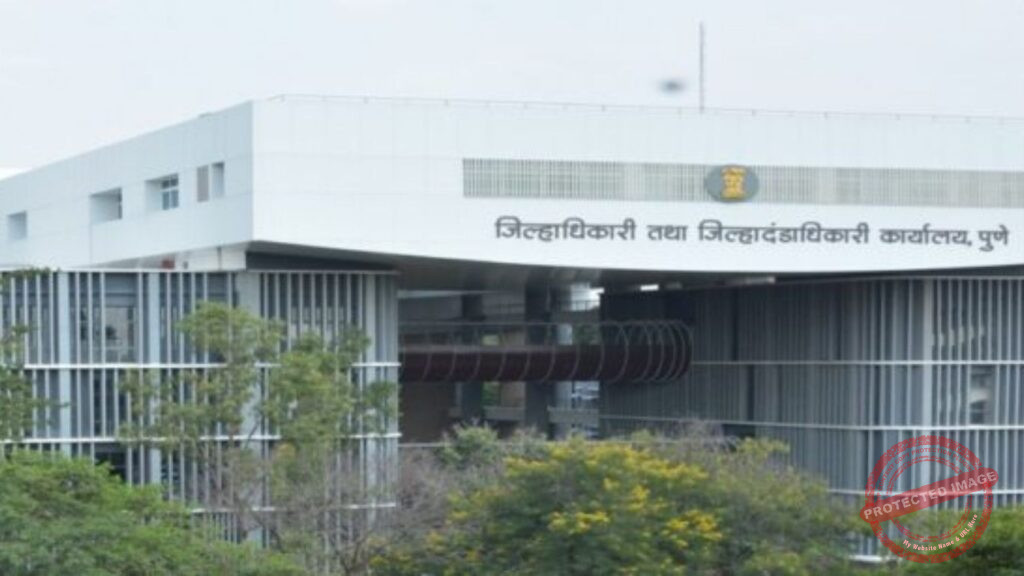
A comprehensive review meeting was recently held at the District Collector’s Office under the leadership of the Resident Deputy Collector and District Census Officer. The meeting brought together tehsildars, chief officers of municipal councils and nagar panchayats, representatives of municipal corporations, and officials from cantonment boards to finalise the implementation roadmap. Officials emphasised the importance of timely training, logistical coordination, and accurate boundary verification to avoid discrepancies during enumeration.
The house-listing phase will focus on collecting detailed information about housing conditions, building usage, amenities, sanitation facilities, water access, electricity supply, and other socio-economic indicators. Unlike previous census rounds that relied heavily on printed schedules, enumerators this year will use dedicated mobile applications designed for real-time data entry and submission. The digital system is expected to improve accuracy, reduce manual errors, and accelerate data consolidation at the state and national levels.
Authorities have outlined a structured training mechanism to equip enumerators and supervisors with the necessary digital skills. A multi-tier training model will be implemented, beginning with master trainers who will guide field supervisors, who in turn will train enumerators assigned to specific blocks. Each census block in Pune district is expected to cover approximately 180 to 200 households, requiring meticulous coordination to ensure no residence is left unaccounted for. Officials have stressed that enumerators must also document newly developed residential clusters, informal settlements, and migrant households to ensure comprehensive coverage.
Administrative boundaries across Pune district have been frozen as of December 31, 2025, for census purposes. The district includes 13 talukas, multiple municipal councils and nagar parishads, two municipal corporations, and three cantonment boards. Accurate demarcation of these boundaries is essential to maintain data integrity and prevent overlaps or omissions. Officials noted that this groundwork is foundational not only for the house-listing phase but also for the population enumeration phase expected to follow in early 2027.
The nationwide Census exercise, spanning 2026–2027, will unfold in two stages: the house-listing and housing census, followed by population enumeration. The digital transformation of this process aligns with broader government initiatives aimed at enhancing transparency, efficiency, and technological integration in public administration. Real-time data validation, geo-tagging capabilities, and instant upload mechanisms are expected to significantly modernise the census workflow compared to earlier decades.
District officials have appealed to residents to cooperate with enumerators during the survey period and provide accurate information. Since census data plays a critical role in shaping policy decisions, infrastructure planning, welfare schemes, resource allocation, and development strategies, public participation is crucial. Data collected during this exercise will influence planning for housing, healthcare, education, employment, and urban development over the next decade.
In conclusion, Pune district’s proactive preparations reflect a serious commitment to executing a smooth and technologically advanced Census operation. With structured training programmes, clearly defined administrative boundaries, and digital tools ready for deployment, the district is positioning itself to contribute effectively to one of India’s most important national data exercises. As May 16 approaches, the focus now shifts to on-ground readiness and ensuring comprehensive household coverage across urban and rural areas alike.
Follow us On Our Social media Handles :
Instagram
Youtube
Facebook
Twitter
Also Read- Pune