Ganesh Visarjan: The Spiritual and Ecological Wisdom Behind a Sacred Tradition
Pune Ganesh Visarjan carries a deeper message about nature, traditional clay idols, soil, water, birds and the cycle of creation, says Shri Raghunath Guruji Yemul.
Pune: As Ganeshotsav draws to a close, the immersion of Lord Ganesha idols marks an emotional and deeply symbolic moment for devotees. While Visarjan is traditionally seen as the ceremonial farewell to Lord Ganesha, the practice of creating idols from natural clay and returning them to water reflects a larger philosophy – of life, nature and the cycle of creation.
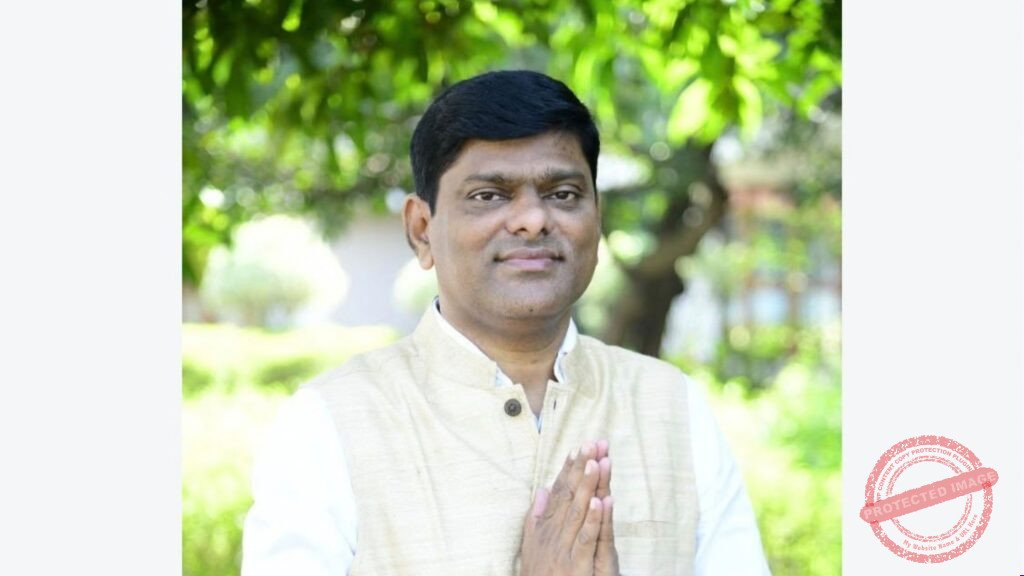
According to Shri Raghunath Guruji Yemul, spiritual teacher and environmental researcher, the traditional practice carries both spiritual significance and an important message about humanity’s relationship with nature.
The symbolism of Lord Ganesha
The form of Lord Ganesha itself is traditionally interpreted as a collection of messages for human life. His large ears remind us to listen more, while his small mouth encourages us to speak less but meaningfully. His small eyes symbolise concentration and his large head represents broad and expansive thinking.
The mouse, his traditional vehicle, is often interpreted as a symbol of the restless and wandering mind. Lord Ganesha’s association with the mouse therefore conveys the importance of bringing the mind under the guidance of wisdom and vivek.
In this sense, the worship of Ganesha is not limited to ritual; it is also an invitation to cultivate good judgment, sensitivity, courage, discipline and determination.
Why natural clay mattered
The month of Bhadrapada coincides with the monsoon, when rivers, soil and vegetation experience renewed activity. Traditionally, Ganesha idols were made from locally available natural clay and natural colours.
During the days of worship, devotees offered durva, flowers, leaves and other naturally occurring materials as sacred nirmalya. At the conclusion of the festival, these materials returned to nature through the immersion ritual.
Natural clay, organic offerings and river sediments can become part of broader natural processes involving soil, minerals and organic matter. Fine silt, clay, sand and organic components contribute to the formation and renewal of alluvial soils.
The traditional idea can therefore be understood as a symbolic ecological cycle:
Natural Ganesha idol → Visarjan → natural elements return to the ecosystem → soil → seeds → new vegetation
This does not imply that an immersed idol directly transforms into fertile soil; rather, it represents the broader principle of nature continuously recycling its materials.
From Ganeshotsav to Pitru Paksha
The period following Ganeshotsav marks the beginning of Pitru Paksha, traditionally dedicated to remembering and expressing gratitude towards ancestors. Among the associated practices is offering food to crows and other birds.
Beyond its spiritual significance, the tradition reflects values of compassion and care for living beings. Fruit-eating birds can disperse seeds through their droppings, potentially carrying them to different locations. Where conditions of soil, moisture and rainfall are suitable, such seeds can germinate and contribute to the growth of new plants and trees.
Thus, the traditions surrounding Ganeshotsav and Pitru Paksha can be viewed as conveying a larger message connecting faith, soil, water, birds, seeds and trees.
A message relevant to the present
In an era when environmental concerns increasingly accompany large public celebrations, the traditional emphasis on natural materials offers a meaningful perspective.
The essence of the message, according to Shri Raghunath Guruji Yemul, is that devotion and environmental responsibility need not be separate. The worship of Lord Ganesha, the embodiment of sadbuddhi and wisdom, can also inspire people to protect water bodies, respect soil, care for living beings and preserve trees and greenery.
Listen more. Speak less, but meaningfully. Remain focused. Live with wisdom. Serve living beings. Protect nature.
Ultimately, Ganesha Visarjan can be understood not only as a farewell, but as a reminder of a timeless principle: what comes from nature returns to nature, while the values awakened by devotion remain with us.
Based on inputs from Shri Raghunath Guruji Yemul, Dhyanguru, Spiritual Science and Environmental Researcher.
Social media Handles :
Instagram
Youtube
Facebook
Twitter
NewsDotz