Centre Approves Leopard Sterilisation in Maharashtra; Forest Minister Orders AI-Based Measures to Curb Human-Leopard Conflict
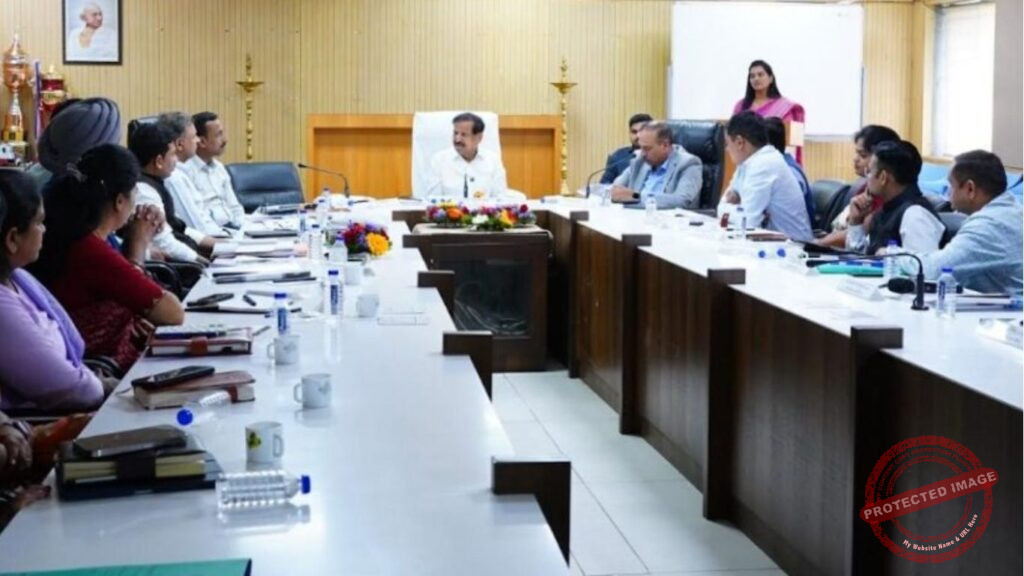
Government approves immuno-contraceptive sterilisation of leopards in Maharashtra; Forest Minister also orders deployment of AI-alerts and high-tech surveillance to reduce conflicts.
Pune | November18,2025: The central government has granted formal clearance for a pioneering sterilisation initiative targeting wild leopards in Maharashtra’s conflict-prone zones, signalling a major policy shift in wildlife management. The approval, announced by the state’s Forest Minister Ganesh Naik, comes against the backdrop of escalating human–leopard confrontations in regions such as the Junnar division and surrounding sugar-cane belt. According to senior forest officials, the method chosen will be an immuno-contraceptive technique delivered via dart-injection, enabling fertility control of female leopards without invasive surgery.
In the meeting convened at Van Bhavan in Pune, the minister directed the forest department to submit detailed actionable plans, including budget-requirements, radar mapping of hotspots, and a rapid roll-out of advanced technologies such as AI-based alert systems and drone surveillance. He stressed that all necessary measures must be implemented immediately to safeguard lives and livelihoods of villagers living in leopard-prone zones.
The sterilisation plan will initially focus on “hot-spots” where frequent attacks on livestock and humans have been recorded. Officials revealed that the proposal covers over 120 female leopards in the Junnar region alone, and that monitoring will include satellite-collars and tracking for behaviour and movement for at least 2-3 years post-treatment. The goal is not to eradicate leopards, but to stabilise population growth and reduce intrusion into human zones.
Parallelly, AI- and sensor-based systems are being installed in villages and farmlands bordering forest areas. These include solar-powered motion sensors, infrared cameras, sound-based deterrent alarms and a connected mobile app interface for forest and village-patrol teams. For instance, devices capable of detecting leopard movement within 50–100 metres have already been deployed in areas of Junnar. When triggered, these systems alert both villagers and forest personnel instantly.
Forest officials say that the regions targeted—especially those with dense sugar-cane cultivation and scattered habitations—have seen repeated incidents of livestock depredation and human injuries. Research by the Wildlife Institute of India (WII) and state-forest-department teams identified sugar-cane fields as ideal breeding and cover zones for leopards, which resulted in increasing overlap with human activity. The twin strategy—sterilisation plus high-tech monitoring—is meant to shift from reactive rescue/relocation to proactive conflict mitigation.
Nevertheless, experts caution that sterilisation of wild carnivores, especially leopards, is uncharted territory in India and carries significant logistical, ethical and ecological challenges. Capturing animals, administering safe medicine, tracking them post-treatment, and assessing long-term behavioural effects will require sustained investment and rigorous scientific oversight. The forest minister’s plan also includes additional measures like improved battery backup in irrigation pumps (so farmers avoid night-field work), expansion of rescue base-camps, and community awareness programmes.
Follow us On Our Social media Handles :
Instagram
Youtube
Facebook
Twitter
Also Read- Pune