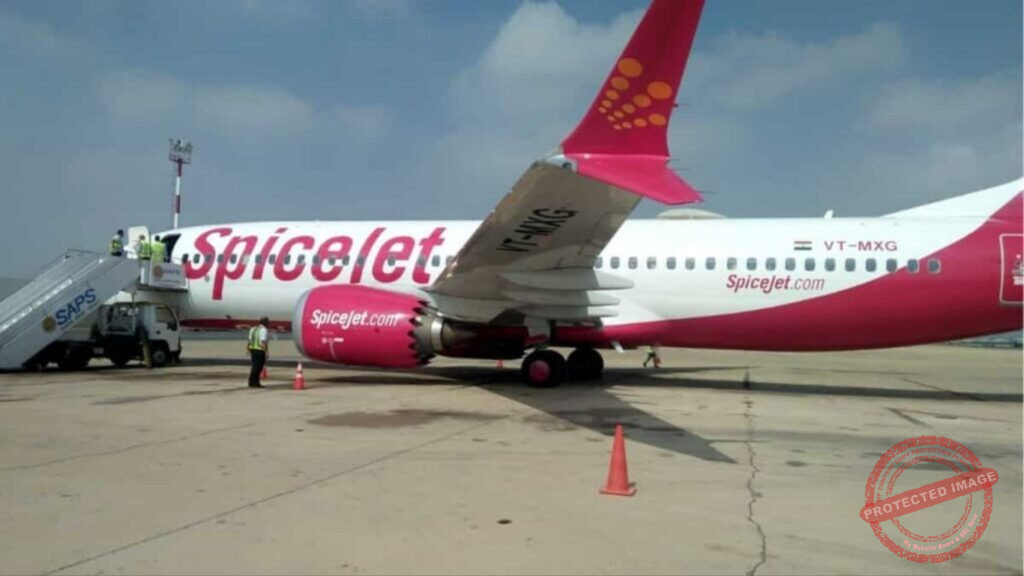
Emergency Return of Delhi-Leh SpiceJet Flight After Mid-Air Engine Failure
Delhi
A Delhi to Leh flight makes an emergency return mid-air due to an engine failure, prompting rapid response from crew and safe landing back at the airport.
Pune | 24 February, 2026- A flight bound for Leh from Delhi was forced to return to the departure airport mid-air after one of its engines reportedly developed a technical malfunction shortly after take-off, triggering an in-flight emergency and a tense but successful return. The aircraft, operating under a major Indian carrier, experienced the issue at cruising altitude, leading pilots to declare an emergency and initiate immediate procedures for a safe turnaround.
Passengers onboard described a sudden change in cabin sounds and vibration shortly after the aircraft climbed beyond 10,000 feet. Flight crew members announced the situation calmly over the public address system, informing travellers that an engine problem had been detected and that standard safety protocols were being enacted. Cabin crew instructed everyone to remain seated with seat belts fastened as the pilots prepared for the return to the airport of origin.
The flight crew’s prompt action and adherence to safety procedures helped avert potential escalation of the situation. Pilots shut down the affected engine, stabilised the aircraft on the remaining engine, and coordinated with air traffic control for priority clearance to land back at the airport. Emergency vehicles, including fire tenders and ambulances, were placed on standby as the aircraft approached the runway for landing.
After the aircraft touched down safely, technical teams and airline engineers boarded the plane to assess the reported engine fault. Passengers disembarked under orderly supervision, and airline ground staff arranged alternative travel plans for stranded travellers. Some passengers headed for medical check-ups as a precaution, although no serious injuries were reported.
Air travel experts say that modern commercial aircraft are designed to operate safely even when one engine is shut down, and pilots are trained extensively for such scenarios. Engine failures in mid-air are rare but can be caused by factors including bird strikes, mechanical defects, or sensor malfunctions. Aviation safety protocols demand that crews prioritise diversion or return to the nearest suitable airport whenever the integrity of a major system is in question.
Industry analysts note that while passengers may experience anxiety during such events, the aviation ecosystem — from cockpit crew to air traffic services — is engineered to handle contingencies efficiently. Following any such event, formal investigations by aviation safety authorities and the airline are standard practice, with the goal of identifying root causes and preventing recurrence.
In the wake of the incident, the airline issued statements reassuring the public that safety remains its top priority. The carrier confirmed that the aircraft involved will undergo comprehensive checks by certified engineers before it is cleared for future flights. Affected passengers were offered hotel accommodations, rebooking options on subsequent flights, and customer assistance services to mitigate inconvenience.
The emergency return has reignited conversations about maintenance standards and operational readiness in the aviation sector, especially on challenging routes like Delhi-Leh where terrain, weather, and altitude demand high reliability. Passengers and aviation enthusiasts alike have expressed appreciation for the professionalism exhibited by the flight crew and ground teams in managing an unexpected mid-air situation.
Follow us On Our Social media Handles :
Instagram
Youtube
Facebook
Twitter
Also Read- Pune