Jay Pawar Demands Transparent Probe into Ajit Pawar Plane Crash, Calls for Action Against VSR Aviation Operator
Pawar
Jay Pawar seeks a fair, transparent investigation into the Baramati plane crash that killed his father Ajit Pawar, urging accountability and ban on VSR aviation firm.
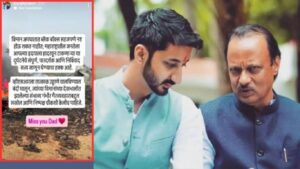
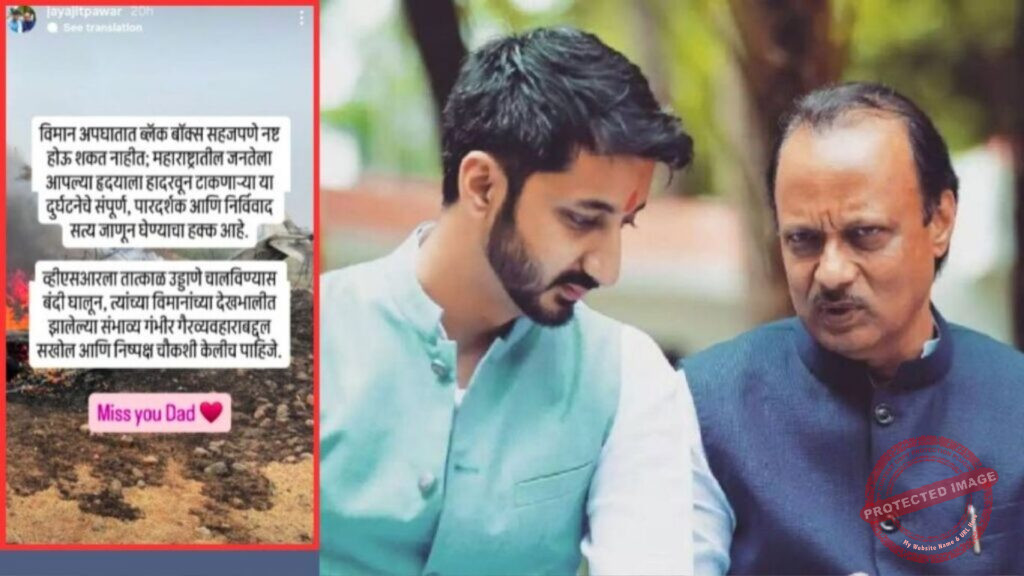
Pune | 19 February, 2026- Jay Pawar, the younger son of the late Maharashtra Deputy Chief Minister Ajit Pawar, has escalated calls for a transparent and thorough investigation into the Baramati plane crash that claimed his father’s life on January 28, 2026, along with four others, arguing that the people of Maharashtra deserve a complete and indisputable account of what happened. In a strongly worded public appeal on social media, Jay Pawar questioned the initial findings and raised concerns about possible lapses and irregularities in the operation and maintenance of the aircraft, emphasising that critical evidence — including data from the aircraft’s black boxes — cannot be destroyed easily and must be examined fully.
The aircraft involved was a Learjet 45XR operated by VSR Ventures Private Limited. Jay Pawar urged authorities to ban VSR from flying operations until a detailed and impartial probe is completed, contending that only a comprehensive examination can restore public confidence in aviation safety and accountability. His emotional statement, which included the message “Miss you Dad,” underscored both his personal grief and his demand for clarity over the circumstances that led to the fatal crash near the Baramati airstrip.
Concerns over the integrity of the black boxes — flight data recorders designed to survive severe crashes — have become a central point of debate, with Jay Pawar and others asserting that all available information must be extracted and analysed without omission. Aviation experts note that such recorders are engineered to endure intense heat and impact, making their examination crucial to understanding exactly what transpired in the moments before the crash. The calls for transparency have highlighted the importance of ensuring that no detail is overlooked in the official investigation process.
The push for accountability has also resonated with other political leaders and family members. Leaders from the Nationalist Congress Party (NCP) have echoed Jay Pawar’s demands, urging government authorities to facilitate a Central Bureau of Investigation (CBI)‑led inquiry into the crash. They argue that an independent probe by a central agency with significant technical expertise would reassure the public about the integrity of the findings and ensure that all technical, operational, and regulatory aspects are thoroughly examined.
Critics of the current investigation have also questioned details such as last‑minute changes in flight crew, communication sequences with air traffic control, and the absence of recorded distress communications before the aircraft impacted the ground. These concerns have amplified calls for an authoritative examination that goes beyond routine procedural scrutiny and places emphasis on forensic analysis, flight operations, and pilot decision‑making.
The Aircraft Accident Investigation Bureau (AAIB) and aviation regulators have stated that specialist teams are working to retrieve data from the damaged Cockpit Voice Recorder (CVR) and Flight Data Recorder (FDR). While initial reports confirm that both devices were exposed to intense heat, efforts are ongoing to salvage and interpret any usable data that can shed light on the flight’s final moments. The progress and outcomes of these technical efforts remain a focal point as families and the public await clearer answers.
Beyond technical and procedural questions, Jay Pawar’s appeal has ignited broader discussions about aviation safety standards, regulatory oversight, and operator compliance in India’s civil aviation sector. Observers say that a transparent investigation — with findings shared publicly — could strengthen safety protocols, reinforce best practices, and help prevent similar tragedies in the future by highlighting areas for improvement.
For Jay Pawar and many others, the demand for clarity represents both a personal quest for closure and a public call for accountability. His statement has drawn attention across political and civil society circles, reflecting wider public interest in ensuring that a high‑profile crash involving a public figure is scrutinised in a manner that leaves no doubt about the causes and lessons learned.
Follow us On Our Social media Handles :
Instagram
Youtube
Facebook
Twitter
Also Read- Pune