Major Traffic Shutdown on Mumbai-Pune Expressway After Gas Tanker Overturns

Mumbai
A gas tanker carrying highly flammable propylene overturned near the Adoshi Tunnel on the Mumbai-Pune Expressway, causing prolonged traffic standstill and stranding commuters for hours.
Pune | 04 February, 2026 – A major emergency situation unfolded on the Mumbai–Pune Expressway after a gas tanker carrying highly flammable propylene overturned near the Adoshi Tunnel in the Bor Ghat section, forcing authorities to completely shut down traffic on the Mumbai-bound carriageway. The accident occurred around 5 pm, triggering immediate safety concerns due to the hazardous nature of the gas being transported. As a precautionary measure, movement of vehicles was halted to prevent the risk of fire or explosion, leading to one of the most severe traffic disruptions on the expressway in recent times.
Following the accident, emergency response teams including highway police, fire brigade units, and specialised hazardous material handling personnel were rushed to the spot. Officials detected a gas leak from the overturned tanker, which significantly increased the danger level in the area. Given propylene’s high flammability, authorities decided to cordon off the entire stretch and restrict access until the leak could be contained safely. The containment process proved challenging and time-consuming, requiring technical expertise and careful handling to avoid further escalation.
The shutdown resulted in massive traffic congestion stretching several kilometres, leaving thousands of commuters stranded for hours. Private vehicles, buses, and heavy transport trucks were caught in long queues, with many travellers reporting lack of access to food, water, and restroom facilities. Several commuters were forced to remain inside their vehicles overnight as traffic remained at a standstill well into the next day. Limited movement was allowed on the opposite carriageway under strict monitoring, but overall traffic flow remained severely affected.
Traffic authorities issued advisories urging motorists to avoid the Mumbai–Pune Expressway and use alternate routes such as the old Mumbai–Pune highway or other state highways until the situation was brought under control. However, diversion routes also witnessed heavy congestion as stranded vehicles attempted to reroute, compounding travel delays across the region. Officials appealed to commuters to remain patient and cooperate with on-ground personnel managing the emergency.
The incident raised fresh concerns about the transportation of hazardous materials on busy expressways, particularly during peak traffic hours. Experts pointed out that even a minor mishap involving flammable cargo can paralyse critical transport corridors and pose serious risks to public safety. Calls have intensified for stricter monitoring of hazardous cargo vehicles, enhanced safety protocols, and designated time windows for such transport to minimise risks to commuters.
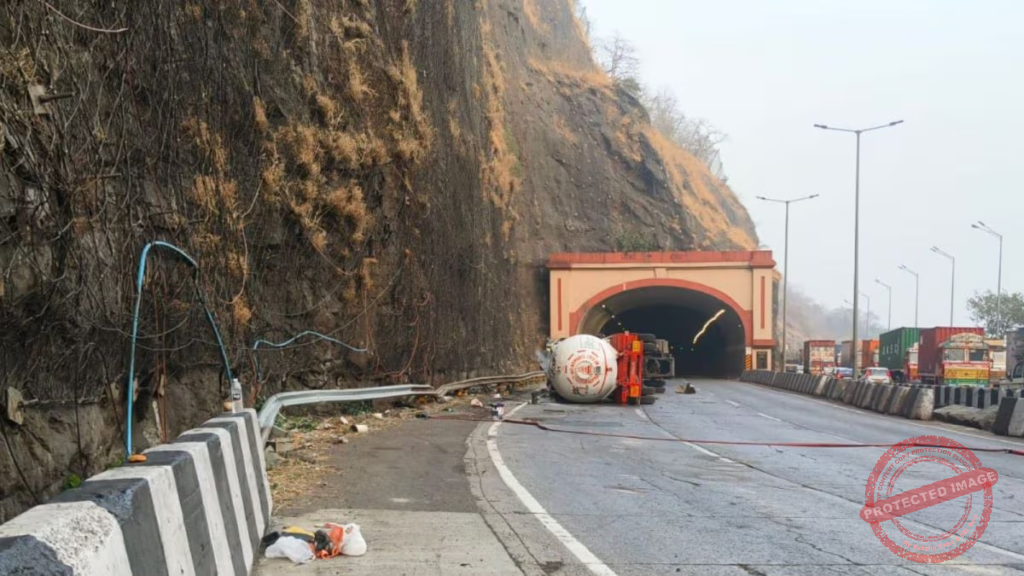
Authorities maintained that public safety remained the top priority and that traffic would only be restored after ensuring the gas leak was fully controlled and the tanker safely removed. Recovery operations continued under close supervision, with teams working to stabilise the situation and clear the affected stretch of the expressway. Motorists were advised to stay updated through official traffic alerts before planning travel on the route.
The Mumbai–Pune Expressway, a vital link between two major cities, frequently handles high traffic volumes, making incidents of this nature particularly disruptive. The gas tanker accident serves as a stark reminder of the importance of emergency preparedness, rapid response coordination, and infrastructure resilience in managing large-scale transport emergencies. Authorities are expected to review safety measures following the incident to prevent similar disruptions in the future.
Follow us On Our Social media Handles :
Instagram
Youtube
Facebook
Twitter
Also Read- Pune