Man Declared Dead in 2015 Kedarnath Flood Found Alive After 12 Years – Reunited with Family Through Psychiatric Hospital Rehabilitation
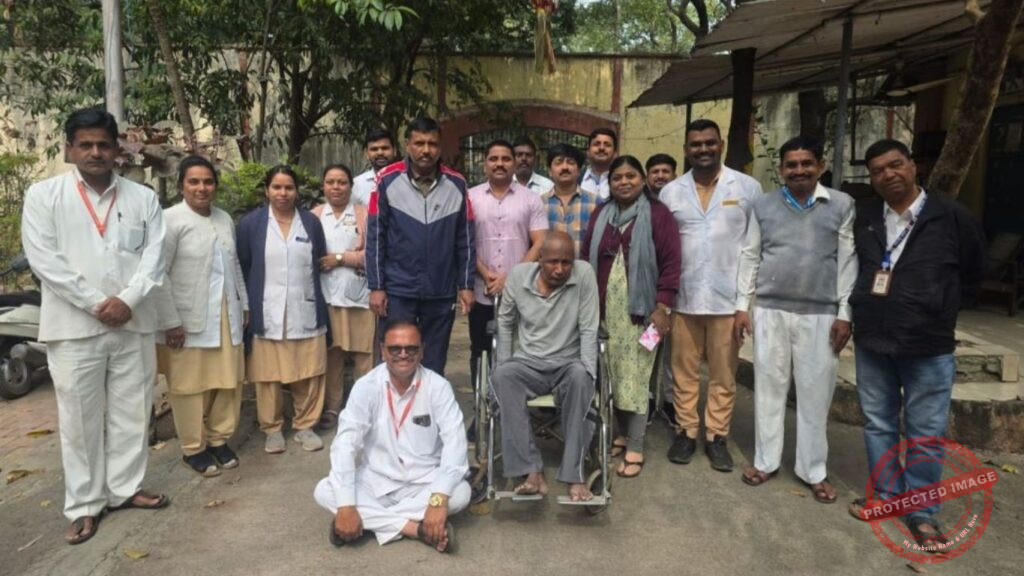
A man presumed dead in the 2015 Kedarnath floods resurfaces in Maharashtra in 2025; after psychiatric treatment, he’s reunited with his family.
Pune |08 December 2025: A profoundly emotional and unlikely story has come full circle. A man believed to have perished in the devastating 2015 Kedarnath floods in Uttarakhand has been found alive – and reunited with his family after years of uncertainty – thanks to psychiatric rehabilitation at a mental hospital in Pune.
The man, named Shivam, went missing during the massive floods that struck Kedarnath and surrounding areas. At the time, extensive search efforts failed to yield any trace of him. His family, assuming he was lost forever, had conducted symbolic last rites, believing him dead. But fate had something unexpected in store.
It was only in 2021 that Shivam’s life took a dramatic turn. He was picked up in Chhatrapati Sambhajinagar district (previously Aurangabad) when local authorities arrested him in a theft case connected to a temple burglary. However, upon closer investigation at Pune’s Regional Mental Hospital (RMH) in Yerawada, doctors diagnosed him with serious mental-health challenges – a condition identified as disorganized schizophrenia. He was unable to communicate coherently, and his mental state required immediate therapeutic intervention.
Once admitted on October 27, 2021, the hospital’s social-work team started painstaking efforts to piece together Shivam’s identity. His speech was broken and his memory fragmented, but during counselling sessions he sometimes mentioned a school name and place – a detail that led investigators to a village in Haridwar district. Language clues (he spoke a local Pahadi dialect), combined with official records and outreach by social workers, helped bridge the gap between patient and family.
The breakthrough came when hospital staff traced his background to a school in Roorkee, Uttarakhand. The information was passed on to the police and eventually to his family. His brother confirmed that Shivam had gone missing from the Kedarnath temple during the floods – and that they had long accepted his death after unsuccessful search efforts.
Meanwhile, legal proceedings against Shivam on charges under Section 295 of the Indian Penal Code were dropped. The court found no evidence tying him to the burglary case; the accused who had implicated him were identified separately. With the legal cloud lifted, RMH cleared him for discharge. Over nearly two years, a collaborative effort involving psychiatrists, social workers, legal authorities, and police paved the way for a safe reunion. The hospital formally handed him over to his family, marking the end of a 12-year ordeal.
For Shivam’s relatives, the reunion was both joyous and traumatic – a moment of disbelief, relief, and deep gratitude. For the hospital and social-work team, it is a landmark case: arguably the first time that an unidentified mentally-ill patient – once presumed dead by his own family – has been successfully traced, treated, and reunited with kin.
Mental-health experts and hospital officials have highlighted the significance of this case beyond its emotional impact. They call it a testament to the importance of compassionate psychiatric care, diligent social work, and robust coordination between mental-health institutions, police, and legal authorities. In particular, it underscores the vital role of identifying patients carefully, tracking background information sensitively, and ensuring due process when dealing with those suffering from mental illness.
The story also resonates deeply with disaster-victim families across India. The 2013/2015 floods in Uttarakhand left thousands missing or unaccounted for. For many families, accepting loss became part of coping. Shivam’s reunion offers a rare-but powerful-message of hope: that even after years of despair, recovery, rediscovery and reconnection are possible.
As India grapples with disaster response, missing-persons protocols and post-disaster rehabilitation, this case could serve as a model. It shows how mental-health institutions and social services can play a critical role in restoring lost identities and reuniting families.
Follow us On Our Social media Handles :
Instagram
Youtube
Facebook
Twitter
Also Read- Pune