Pune Court Remands Sheetal Tejwani in Custody Till December 11 in High-Profile Mundhwa Government Land Scam
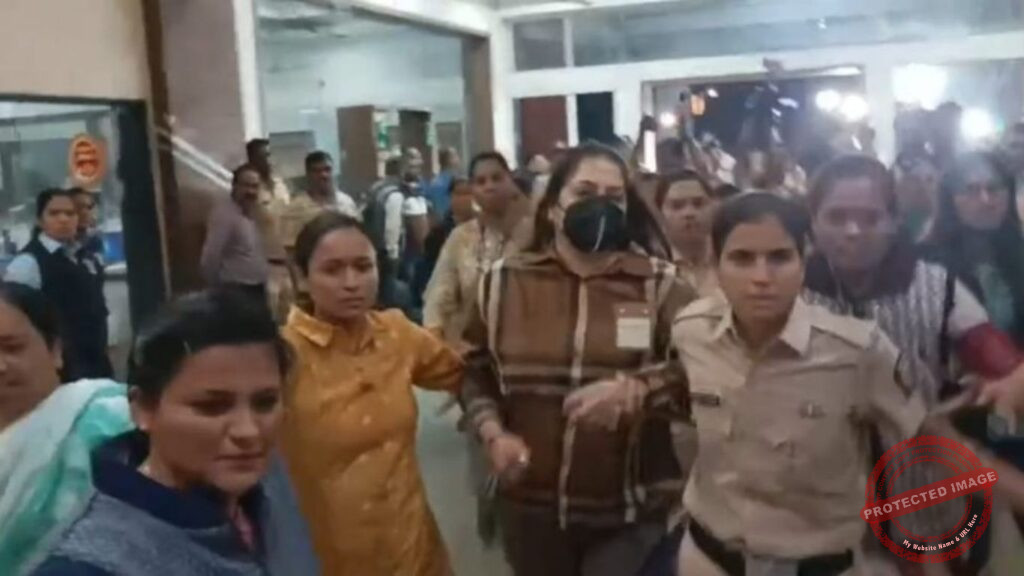
Pune police detain developer Sheetal Tejwani in a ₹1,500–1,800 crore Mundhwa land scam. Court remands her custody till Dec 11 as investigations deepen.
Pune|05 December 2025: Pune’s high-profile Mundhwa government land scam took a dramatic turn as developer Sheetal Tejwani was remanded to police custody until December 11, intensifying scrutiny on one of Maharashtra’s most controversial land transactions in recent years. Investigators allege that Tejwani played a central role in the illegal acquisition and attempted sale of a 43-acre government-owned plot in Mundhwa, a property historically classified as Mahar Watan land before being formally taken over by the state several decades ago. Though Watan rights stood cancelled after government acquisition, Tejwani is accused of procuring powers of attorney from more than 270 descendants of former Watan holders between 2006 and 2008, despite their lack of legal claim over the property. The police maintain that these documents were used to create the impression that the land was privately owned and transferable, even though it had already fallen under government ownership and was reserved for institutional purposes.
During the investigation, officers uncovered repeated attempts between 2020 and 2023 to reclaim possession of the land under the guise of Watan re-grant laws, including the submission of a nominal demand draft reportedly showing payment of possession charges. Officials noted that no such amount was ever credited to government accounts, raising suspicion about deliberate misrepresentation. Investigators also found instances of outdated land records being presented as valid, followed by administrative orders allegedly issued without authorized verification. These actions ultimately facilitated a development agreement and eventual sale deed for an amount far below the land’s actual valuation. The 43-acre tract, estimated to be worth between ₹1,500 and ₹1,800 crore, was reportedly sold for just ₹300 crore, raising concerns about undervaluation, irregular processing, and possible evasion of substantial stamp-duty payments.
Inside the courtroom, the police sought extended custody to trace financial trails, recover electronic devices, retrieve original documents, and establish whether public officials were involved in facilitating the transfer. Tejwani’s counsel argued that she had cooperated throughout the inquiry and was not named in the original complaint, but the court ruled that given the scale of the alleged fraud and the complexity of land-record manipulation, custodial interrogation was necessary. Additional cases linked to stamp-duty evasion and fraudulent documentation have also surfaced, widening the scope of the probe. The Economic Offences Wing is now examining the flow of funds connected to the deal, development agreements, and potential collusion with administrative officers who may have bypassed due process.
The case has sparked intense public debate about the vulnerabilities in land-administration systems, especially concerning historical Watan lands that are often exploited due to gaps in documentation and verification. Social activists and legal experts argue that this episode reveals systemic flaws in land governance, inadequate record digitization, and opportunities for powerful entities to exploit technical inconsistencies for massive financial gain. The political dimension surrounding the transaction has further amplified public scrutiny, prompting calls for a deeper investigation into all individuals and entities involved. For Pune, a city facing rapid expansion and escalating land values, the case raises troubling questions about the ease with which public land can be diverted into private hands through procedural loopholes and coordinated manipulation.
As Tejwani’s custody continues, authorities are expected to unravel more details about the chain of events that enabled the controversial land transfer. The outcome of this probe will likely have long-term implications for land-policy reforms, legal safeguards for vulnerable land categories, and accountability mechanisms across administrative departments. With the stakes exceptionally high and public pressure mounting, the coming days will determine whether the case results merely in isolated arrests or triggers a broader structural overhaul aimed at preventing similar frauds in Maharashtra’s real-estate landscape.