Pune PMC Hosts Urban Mobility Workshop, Pushes Big Data, Clean Air & TOD Strategy for Faster Reforms
Pune
Pune Municipal Corporation holds urban mobility workshop focusing on short-term traffic reforms, big data use, clean air action, and TOD planning.
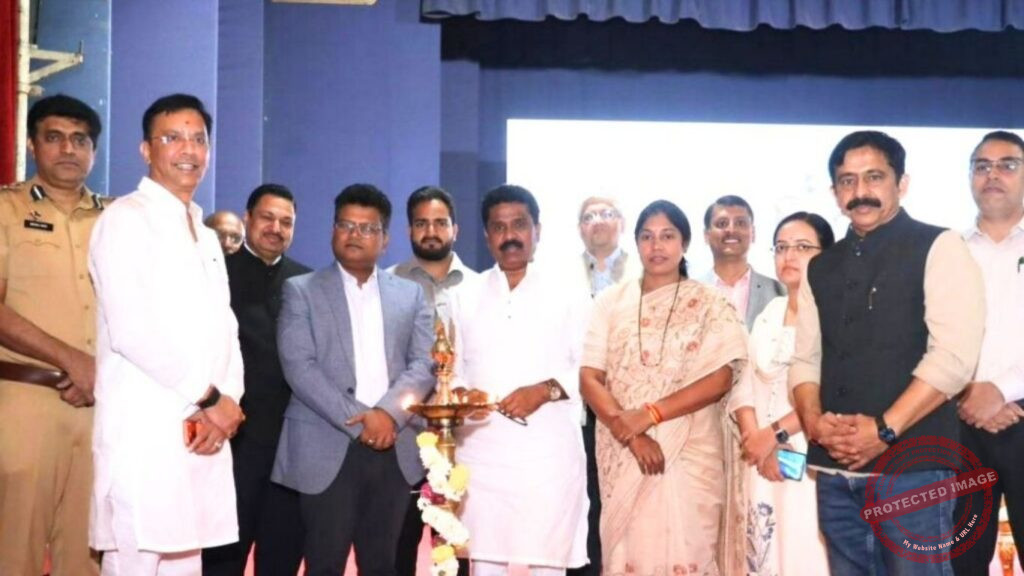
Pune | 18 February, 2026- In a decisive push to address rising congestion and deteriorating air quality, the Pune Municipal Corporation (PMC) recently convened a high-level Urban Mobility Workshop aimed at accelerating practical, short-term transport reforms. The deliberations brought together senior civic officials, planners, enforcement authorities and urban development experts to craft a coordinated roadmap centered on immediate improvements, data-driven governance, environmental sustainability and Transit-Oriented Development (TOD). The workshop, held at Bal Gandharva Rangmandir, underscored a clear administrative shift from long-term conceptual frameworks toward time-bound, measurable outcomes that can directly improve daily commuting conditions for citizens.
Leading the discussions, PMC Commissioner Naval Kishore Ram emphasized that while mega infrastructure projects such as metro expansions are crucial for long-term growth, immediate steps are necessary to ease daily traffic bottlenecks and enhance pedestrian safety. Officials stressed optimizing existing infrastructure through scientific junction redesign, better traffic signal synchronization, improved footpath continuity and dedicated cycling provisions in key corridors. Technology-driven enforcement systems, including automated monitoring and digital penalty mechanisms, were highlighted as essential tools to ensure compliance and sustain reforms.
A major theme emerging from the workshop was the use of big data analytics in urban transport planning. With Pune witnessing rapid growth in vehicle registrations and expanding suburban development, traditional traffic surveys are no longer sufficient. Authorities discussed leveraging real-time traffic monitoring, GPS-based public transport tracking, congestion heat mapping and predictive analytics to identify high-pressure zones and rationalize routes. Experts noted that data-backed governance minimizes guesswork and allows investments to be directed where they can generate the greatest impact, improving efficiency and reducing travel time.
Clean air objectives formed another central pillar of the mobility discussions. Vehicular emissions remain one of the primary contributors to pollution levels in Pune, making sustainable transport solutions critical. Officials advocated promoting public transport usage, encouraging non-motorised mobility such as walking and cycling, and reducing dependence on private vehicles. Commercial corridors like J.M. Road and F.C. Road were identified as potential pilot stretches for pedestrian-friendly redesign, aligning mobility improvements with public health and environmental resilience goals.
The workshop also reinforced plans for Transit-Oriented Development in partnership with the National Institute of Urban Affairs (NIUA). TOD aims to integrate land-use planning with mass transit systems, creating dense, mixed-use neighborhoods within walking distance of metro stations. A model development plan around Shivajinagar Metro Station is expected to demonstrate how residential, commercial and recreational spaces can be seamlessly connected to high-capacity transit. Urban planners explained that without TOD integration, metro infrastructure risks underutilization, whereas coordinated development can boost ridership, reduce carbon emissions and stimulate economic activity.
Participants also emphasized the importance of inter-departmental coordination between civic planning bodies and traffic enforcement agencies. Sustainable mobility reform, they noted, cannot be achieved through isolated interventions but requires synchronized governance, continuous monitoring and stakeholder engagement. Periodic review mechanisms and follow-up consultations are expected to ensure accountability and steady implementation of recommendations emerging from the workshop.
Pune’s mobility challenges have intensified over the past decade due to rapid population growth, rising vehicle ownership and expanding suburban sprawl. Congestion has begun affecting economic productivity, commute times and overall quality of life. If the proposed short-term measures, big data integration and TOD initiatives are executed effectively, the city could witness measurable improvements in traffic flow, public transport adoption and pollution reduction. Urban policy observers believe that Pune’s integrated approach—combining immediate engineering fixes with long-term land-use reforms—could serve as a model for other fast-growing Indian cities grappling with similar mobility crises.
The workshop marks an important milestone in Pune’s transition toward smarter, cleaner and more efficient transport governance. While the success of this roadmap will depend on sustained political will, technical execution and public cooperation, the initiative signals a proactive effort to balance rapid urban growth with environmental responsibility and commuter convenience.
Follow us On Our Social media Handles :
Instagram
Youtube
Facebook
Twitter
Also Read- Pune