SHANTI Bill 2025 proposes unified nuclear law to modernise regulation, enable private participation and support India’s long-term clean energy expansion goals
SHANTI
The SHANTI Bill, 2025 aims to modernise India’s nuclear framework by replacing outdated laws, allowing limited private participation, strengthening safety oversight and aligning nuclear power growth with clean energy targets.
New Delhi|December 20 2025:The Union government has introduced the Sustainable Harnessing and Advancement of Nuclear Energy for Transforming India (SHANTI) Bill, 2025, marking a significant move to update India’s nuclear energy laws in line with present-day requirements and future ambitions. The proposed legislation seeks to consolidate existing statutes into a single framework that supports expansion, innovation and regulatory clarity while maintaining strong strategic oversight.
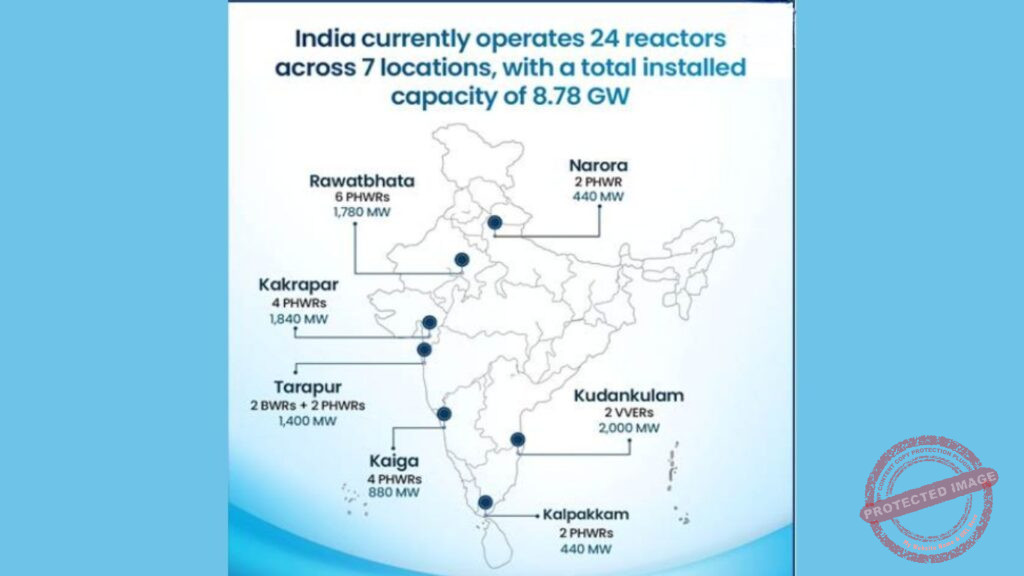
India’s nuclear sector has historically been governed by the Atomic Energy Act, 1962 and the Civil Liability for Nuclear Damage Act, 2010. While these laws laid a strong foundation for peaceful nuclear development, policymakers argue that they no longer provide the flexibility needed to scale capacity or attract broader participation. Nuclear power currently contributes slightly over three percent to the national electricity mix, with an installed capacity of 8.78 GW, a figure the government aims to significantly increase over the next decade.
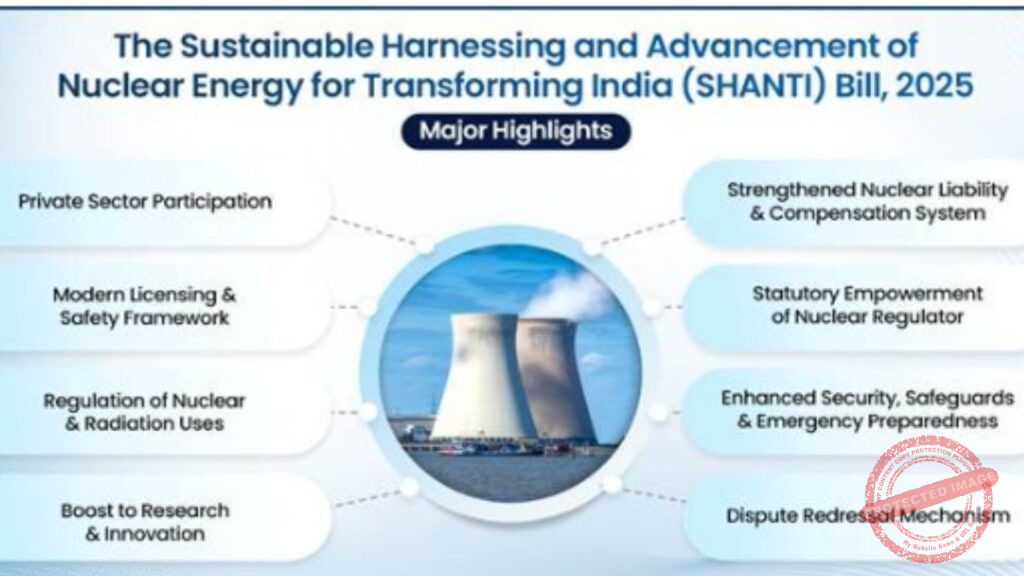
The SHANTI Bill opens the door for private companies to engage in areas such as nuclear power generation, plant operations and equipment manufacturing, subject to strict licensing and safety approvals. At the same time, sensitive functions including fuel reprocessing, enrichment activities and high-level waste management remain under the exclusive control of the Central Government, ensuring national security interests are protected.
A key reform proposed in the bill is a graded liability framework, where operator liability limits vary depending on the nature of the nuclear installation, replacing the existing uniform cap. The bill also grants statutory status to the Atomic Energy Regulatory Board, reinforcing regulatory independence and oversight. Provisions have been included to regulate non-power applications of nuclear technology in sectors such as healthcare, agriculture and research.
By aligning legal reforms with India’s target of achieving 100 GW nuclear capacity by 2047 and long-term decarbonisation goals, the SHANTI Bill is positioned as a critical step in reshaping the country’s nuclear energy future.
Follow us On Our Social media Handles :
Instagram
Youtube
Facebook
Twitter
Also Read- Pune