Supreme Court halts its own order in Akola riots case; community-based SIT on hold for further review
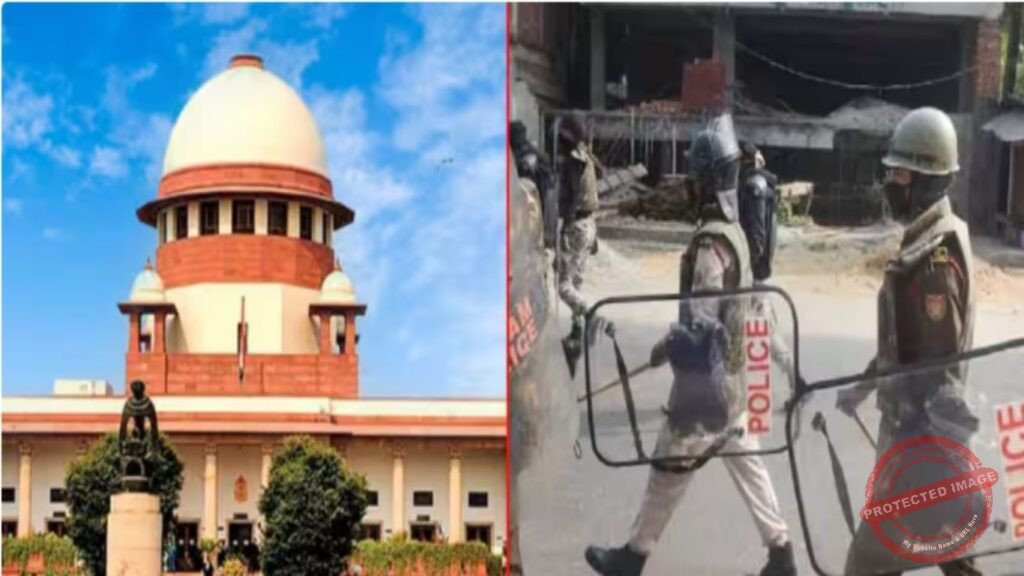
Supreme Court
The Supreme Court has paused its earlier order directing a Hindu–Muslim mixed SIT to probe the 2023 Akola riots after the Maharashtra government objected.
11 November 2025, Akola – The Supreme Court has stayed its earlier decision that mandated the formation of a mixed-community Special Investigation Team to probe the 2023 Akola riots, marking a major shift in a case that has repeatedly stirred legal and political debate. The original order issued on 11 September 2025 had sharply criticised the Maharashtra Police for failing to register an FIR and for what the Court called a “total dereliction of duty” in the aftermath of the attack on a 17-year-old boy during the riots. The Court had argued that an SIT including senior Hindu and Muslim officers would inspire public confidence and ensure transparency in a case rooted in communal tension.
The state government challenged this directive, saying that linking the composition of an investigative team to religious identity went against the secular principles of policing. The government’s application said the order unintentionally created a precedent where officers’ religion becomes part of the criteria for official duties, something the administration insisted was neither constitutional nor practical. As the matter progressed, a two-judge bench delivered split opinions on whether the earlier order should stand. One judge defended the need for a community-inclusive SIT to restore trust among affected citizens, while the other judge said the issue required deeper consideration and raised concerns about possible implications for policing nationwide.
With no consensus, the case moved to a larger bench. A three-judge bench led by Chief Justice B. R. Gavai then stayed the implementation of paragraph 24 of the original judgment for four weeks, pausing the creation of the SIT until further hearings are completed. The decision means that, for now, the investigation will not proceed under the community-specific structure directed earlier. The Court has indicated that it wants more clarity before deciding whether such a directive is compatible with constitutional values, investigative independence and administrative practicality. Legal experts say this stay opens up a broader debate about how India approaches sensitive cases involving communal violence. Critics of the earlier order have argued that while the intention may have been to reassure victims, designing investigative bodies around religious identity could introduce new complexities into law enforcement. Supporters maintain that in cases where trust in local police has eroded, such measures could help restore credibility.
The Akola riots of 2023 had erupted after a dispute escalated on social media, leading to stone-pelting, arson and violent clashes in several neighbourhoods. The assault on the teenage boy became one of the focal points of the case after allegations surfaced that authorities failed to protect him or act promptly to bring the attackers to justice. The Supreme Court’s criticism in its earlier order reflected its frustration with the handling of the incident and its broader concern about policing practices during communal disturbances.
For now, the focus shifts to the next phase of hearings, where the Court will analyse whether community-based representation in investigative teams strengthens or undermines the legal system. The Maharashtra government is expected to present detailed arguments on why the order should be reconsidered, while petitioners will push for stronger oversight mechanisms in riot-related investigations. The stay has paused the implementation of the controversial directive, but it has also amplified conversations about impartial policing, communal harmony and the structural reforms needed to handle riot cases effectively.
Follow us On Our Social media Handles :
Instagram
Youtube
Facebook
Twitter
Also Read- Pune