Tension in Ashta as Crowd Gathers Outside Strong Room After Alleged 2900-Vote Increase in EVM Count
Tension in Ashta as Crowd Gathers Outside Strong Room After Alleged 2900-Vote Increase in EVM Count
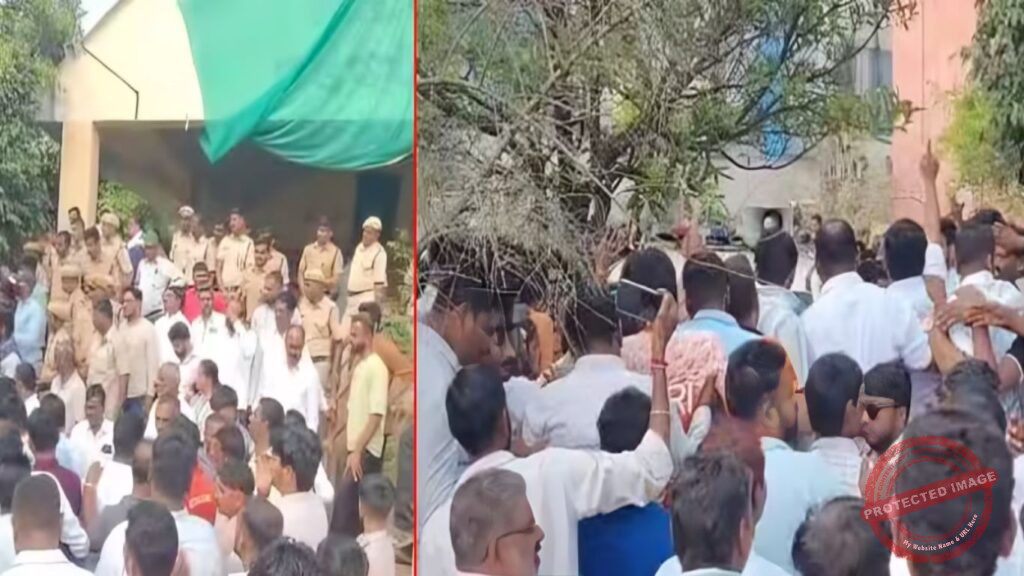
Chaos erupted in Ashta, Sangli, after locals claimed the EVM vote count increased by nearly 2900 votes. Residents gathered outside the strong room demanding clarification as authorities tightened security and began verification.
Sangli : A tense atmosphere gripped Ashta in Sangli district after residents claimed there was a sudden and unexplained rise of nearly 2900 votes in the EVM count following the municipal election. The situation escalated quickly when locals gathered outside the strong room, demanding an explanation and accusing officials of mishandling the voting machines. What began as a small crowd soon turned into a large gathering as news of the alleged discrepancy spread through the town. People insisted that the vote count recorded during polling did not match the figures shared later, leading to doubts about the accuracy of the machines and the transparency of the process.
Witnesses said the crowd grew louder as officials refused to comment until a formal verification was completed. Many residents expressed concern that the alleged increase in EVM numbers could influence the final result, especially in a close contest. Several candidates and their supporters also reached the location, adding to the sense of urgency. For many in the crowd, the issue was less about which party benefits and more about the integrity of the voting system. They argued that even a small error can damage public trust, and that an unexplained jump of nearly 2900 votes is serious enough to warrant immediate scrutiny.
In response to rising tension, the administration increased police presence around the strong room to prevent any attempt to breach security. Officials maintained that the EVMs were sealed properly after polling and that the strong room remained under constant surveillance. They assured the public that a detailed verification process would be conducted in the presence of authorized representatives from all political groups. According to sources, election officers have begun checking records, transport logs and machine seals to determine whether the numbers reported during polling were correctly documented or if there was a clerical error during data entry.
Despite these assurances, many residents stayed outside the premises late into the night, insisting that the results should not be declared until the alleged mismatch is thoroughly explained. Some expressed frustration that such issues continue to arise in local body elections, where close margins often trigger disputes. Others blamed the problem on poor coordination between polling staff and counting teams, arguing that discrepancies could be avoided if data was cross-checked more carefully at the end of voting.
The incident has sparked discussions across Sangli about the reliability of elections and the systems governing them. While EVMs are generally considered secure, any mismatch — especially one as large as the figure being discussed — creates doubts that need to be addressed quickly. Political observers believe the administration must act swiftly to provide clarity, as delayed explanations can lead to speculation and conflict.
For now, Ashta waits for the verification report that will confirm whether the alleged increase was the result of human error or something more serious. The outcome will not only influence the current election but also shape public confidence in the process going forward. Residents are hoping for a transparent resolution that clears confusion and restores trust in the system that determines their local leadership.