Trump Announces Landmark $300 Billion Oil Refinery Project in Texas With Reliance Support

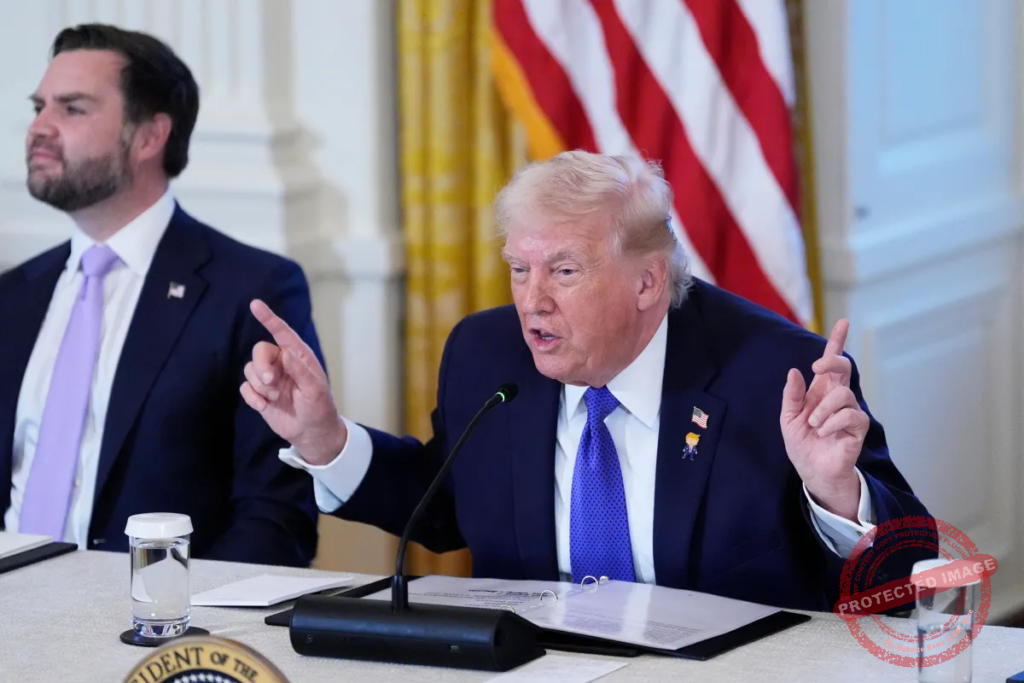
U.S. President Donald Trump
U.S. President Donald Trump has unveiled plans for what he describes as a historic $300 billion oil refinery in Texas – the first new U.S. refinery in 50 years – with backing from India’s Reliance Industries.
Brownsville (Texas) | 11 March, 2026:in a major development that could reshape energy infrastructure, U.S. President Donald Trump announced the construction of a new oil refinery in Brownsville, Texas, describing it as the biggest refinery investment in American history. The project, touted as a $300 billion initiative, will be developed under the banner of America First Refining with financial support from India’s largest private‑sector energy company, Reliance Industries.
Trump made the announcement on his social media platform, calling the refinery the first greenfield refining facility built in the United States in nearly half a century. He framed the project as central to his “America First” energy agenda, aimed at boosting U.S. energy production, strengthening national security, and generating thousands of jobs in South Texas.
“We are returning to real energy dominance,” Trump wrote, adding that the refinery will not only serve domestic fuel needs but also support global export operations. He publicly thanked India and Reliance for their “tremendous investment,” although details about the specific structure and commitments of the financial backing remain limited.
The refinery is planned to be located at the Port of Brownsville, a strategic deep‑water shipping hub on the Gulf Coast. It will be designed to process American crude, including shale oil, into refined petroleum products, helping to reduce reliance on imports and potentially ease supply constraints. Trump emphasized that the facility is expected to create significant economic activity in the region and bolster the U.S. refining sector, which has seen little new construction in decades.
Energy analysts note that the last major refinery to be built in the United States was launched decades ago, as the country shifted focus toward maintaining existing facilities rather than new capacity. The Brownsville project’s projected scale — described by the White House as roughly $300 billion in economic impact – underscores the administration’s intent to elevate domestic energy infrastructure and attract international investment.
While Trump hailed the deal as historic, the announcement comes amid broader global energy uncertainties, including supply disruptions tied to geopolitical tensions in key oil‑producing regions. Some experts have questioned the traditional valuation of refinery projects, noting that typical capital costs differ substantially from projected economic impact figures. Nonetheless, the high‑profile backing from Reliance reflects deepening ties between U.S. energy ambitions and foreign investment.
Financial markets responded to the announcement, with shares of Reliance Industries rising modestly during trading, reflecting investor interest in the cross‑border venture. However, Reliance itself has not yet issued a formal confirmation of its role or investment terms related to the refinery project.
The refinery is expected to support thousands of construction jobs during its development phase and contribute to long‑term employment in operations and related industries. Proponents argue that increased refining capacity could help stabilize fuel markets, support trade balance objectives, and provide downstream economic benefits across supply chains.
Critics of the announcement have pointed out that the project’s timeline and headline economic figures may be aspirational, and significant regulatory, environmental, and logistical hurdles must be overcome before construction can begin. Building a major refinery typically involves multiple years of permitting, planning, and financing coordination before operations commence.
Still, the Brownsville refinery announcement marks a notable moment in U.S. energy policy discussions, showcasing a convergence of geopolitical strategy, international investment, and domestic infrastructure priorities. As the project evolves, policymakers, industry stakeholders, and global observers will be monitoring its progress for potential impacts on energy markets, economic growth, and bilateral business engagement between the United States and India.
Follow us On Our Social media Handles :
Instagram
Youtube
Facebook
Twitter
Also Read- Pune