Artemis II Surpasses Apollo 13 Record, Sets New Milestone for Deep Space Human Travel

Artemis II Surpasses Apollo 13 Record
NASA’s Artemis II mission has broken a 55-year-old record set by Apollo 13, achieving the farthest distance ever traveled by humans from Earth during a lunar flyby mission.
April 8, 2026 | Washington : In a historic achievement for human space exploration, NASA’s Artemis II mission has surpassed the long-standing record set by Apollo 13, marking the farthest distance ever traveled by humans from Earth.
The milestone was reached as the Orion spacecraft, part of the Artemis II mission, journeyed beyond the Moon’s far side, extending human presence deeper into space than ever before. The spacecraft crossed a distance of approximately 252,760 miles (around 406,777 kilometres) from Earth, exceeding Apollo 13’s 1970 record of 248,655 miles by over 4,000 miles.
The achievement occurred during a critical phase of the mission when the Orion capsule-named “Integrity”-passed behind the Moon, initiating its return trajectory toward Earth. This segment of the journey, lasting nearly six hours around the lunar orbit, provided astronauts with unprecedented views and data from the Moon’s far side.
The Artemis II crew includes Reid Wiseman, Christina Koch, Victor Glover and Jeremy Hansen. During the mission, astronauts are conducting observations of nearly 20 scientific targets on the lunar surface, including prominent features such as the Orientale Basin and the Hertzsprung crater.
Canadian Space Agency astronaut Jeremy Hansen marked the moment by recalling the Apollo 13 mission’s legacy, noting that the new milestone represents a significant leap forward for humanity’s exploration ambitions. The mission also witnessed an emotional moment when Commander Reid Wiseman proposed naming a bright lunar crater after a loved one, a gesture that was acknowledged by mission control.
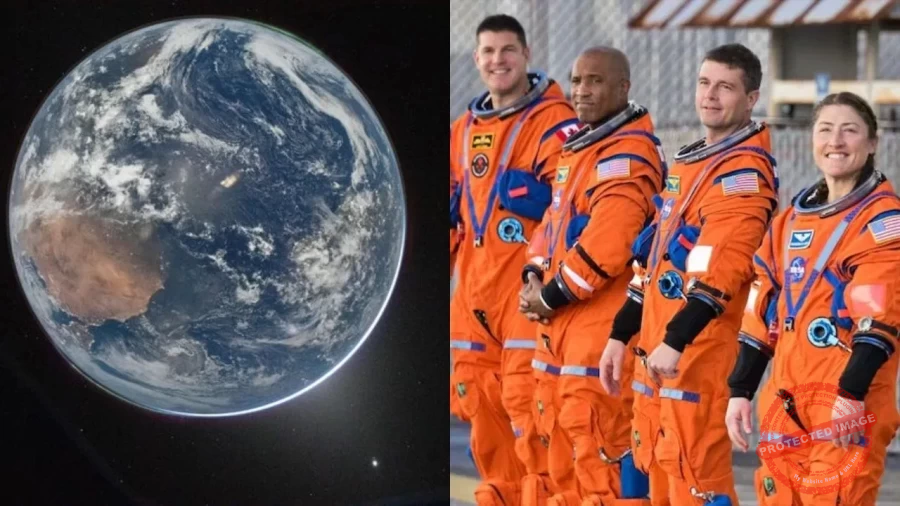
Astronauts have described the experience as awe-inspiring, with Victor Glover noting the extraordinary visual clarity of the Moon and deep space when viewed with the naked eye. The mission is also capturing rare phenomena such as “Earthset” and “Earthrise,” where Earth appears to set and rise beyond the lunar horizon-considered among the most captivating aspects of the journey.
The Orion spacecraft maintained a velocity of over 3,000 miles per hour during its lunar flyby, enabling precise navigation and data collection. The mission is a crucial step in NASA’s broader Artemis programme, which aims to establish a sustainable human presence on and around the Moon.
As Artemis II begins its return journey, the successful milestone underscores a new era in crewed spaceflight, paving the way for future lunar landings and eventual missions to Mars.
Follow us On Our Social media Handles :
Instagram
Youtube
Facebook
Twitter
Also Read- Pune