Children of IAS Officers Seeking Quotas Generates Critical Debate on Generational Reservation Benefits
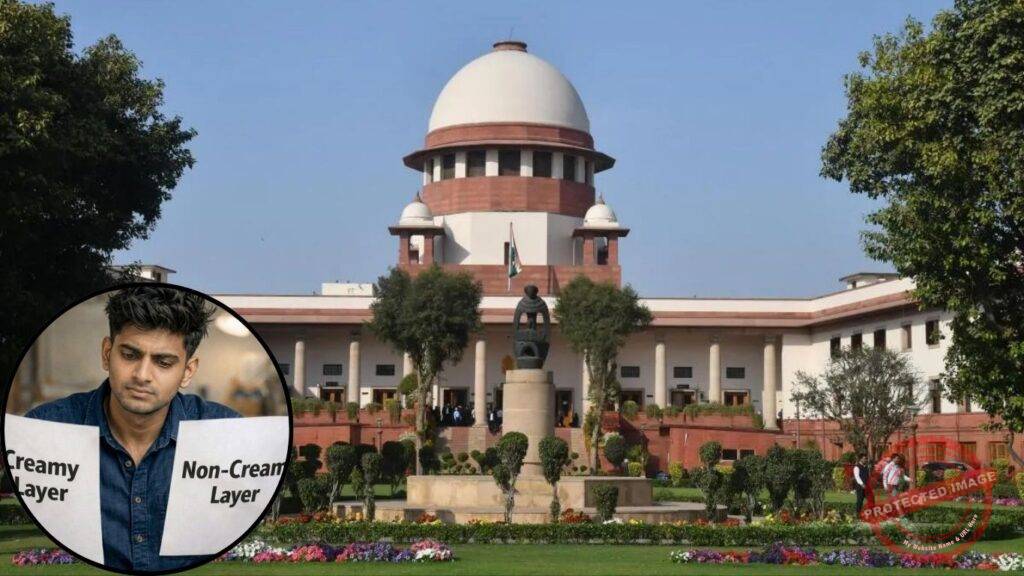
Quotas
The Supreme Court of India raised significant questions regarding the continued extension of reservation benefits to the children of economically and educationally advanced families within backward classes, emphasizing that social mobility achieved through quotas should eventually encourage prosperous families to exit the system
NEW DELHI| May 23, 2026: Highlighting the evolving dynamics of social justice, a two-judge bench of the Supreme Court questioned why families that have already secured substantial educational and financial advancement continue to demand affirmative action benefits. During an oral observation, the bench scrutinized the necessity of offering quotas to individuals whose parents have achieved elite administrative positions within the government structure.
The division bench, comprising Justice B. V. Nagarathna and Justice Ujjal Bhuyan, articulated these insights while issuing a formal notice during the hearing of an appeal originating from Karnataka. The legal dispute centers on a candidate from the Kuruba community who was selected for the position of Assistant Engineer (Electrical) at the Karnataka Power Transmission Corporation Limited under a reserved category. However, the local District Caste and Income Verification Committee subsequently revoked the candidate’s certificate after determining that the family’s annual income of approximately 19.48 lakh rupees placed them squarely within the “creamy layer” threshold. The decision of the verification committee was later upheld by the Karnataka High Court, prompting the current supreme judicial review.

Expressing deep structural concerns over the current reservation matrix, Justice Nagarathna noted that systemic educational and economic empowerment naturally fosters social mobility. The bench observed that when parents achieve high-ranking positions with handsome incomes, their children should transition away from the protective umbrella of reservation to ensure that benefits percolate down to the genuinely underprivileged sections. The court noted that while the state has implemented specific administrative mechanisms to exclude affluent sections from backward class benefits, these exclusionary policies are routinely subjected to prolonged legal challenges. The defense counsel argued that parental job status, rather than gross salary income alone, should dictate the parameters of the creamy layer.
Social media Handles :
Instagram
Youtube
Facebook
Twitter
Also Read- Pune