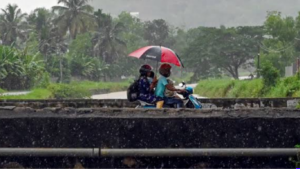
Monsoon Forecast Predicts 98 Percent Rainfall for Maharashtra as Agronomists Outline Smart Crop Selection
monsoon
Despite structural predictions pointing toward a weaker monsoon start in June and July, an authoritative monsoon forecast pegs Maharashtra’s overall seasonal rainfall at a stable 98 percent
Pune | 02 June 2026: A detailed regional monsoon forecast developed by senior agricultural meteorologist Dr. Ramchandra Sabale indicates that Maharashtra will experience near-normal seasonal rainfall this year. Utilizing the verified “Sabale Model” which factors in wind velocity and atmospheric pressure variables across a multi-decade baseline the comprehensive assessment estimates cumulative statewide precipitation at 98 percent. The scientific observations dismiss extreme rumors of a severe 43 percent drought deficit as factually incorrect, attributing the stable seasonal behavior to a neutralizing El Niño phase and positive shifts in the Indian Ocean Dipole.

The model projects a geographical variance across the state’s agricultural zones. Coastal Konkan and Central Vidarbha, including Nagpur and Yavatmal, are anticipated to hit 100 percent of their normal precipitation levels, alongside Parbhani in Marathwada and the Pune district grid. Conversely, Western Maharashtra is hovering close at 97.6 percent, while North Maharashtra, Western Vidarbha, and Eastern Vidarbha zones are expected to record steady yields fluctuating between 94 and 97 percent. Regional variations within specific agricultural epicenters such as Kolhapur, Solapur, and Dhule reflect minor deficits, though still comfortably within the model’s 5 percent standard margin of error.
Despite the highly reassuring long-term forecast, Dr. Sabale warned that a distinct dry spell or rainfall delay is highly probable through the opening months of June and July. Consequently, core reservoirs like the Jayakwadi and Ujni dams face a lower mathematical probability of reaching maximum capacity, whereas the remaining storage networks across Maharashtra are heavily favored to fill completely.

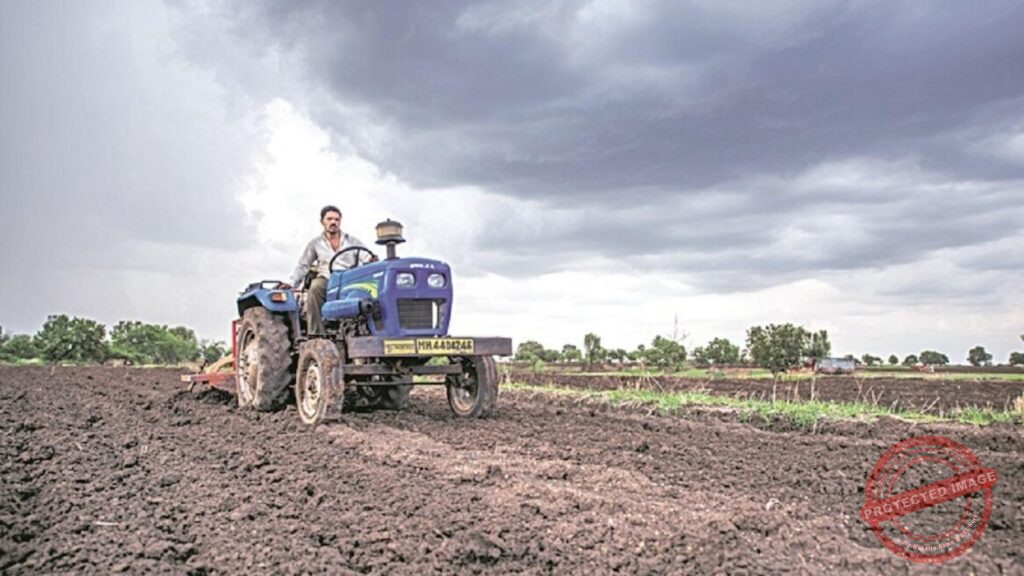
Addressing the statewide agricultural community, Dr. Sabale strongly advised farmers to refrain from rushing early sowing operations. Crop management guidelines urge cultivators to wait until their specific fields record a definitive 65 mm of cumulative rainfall. Given the early-season dry spell, agronomists are championing the immediate selection of short-duration, low-water cash crops such as green gram (moong), black gram (urad), and pearl millet (bajra). Furthermore, farmers intending to cultivate intensive long-term crops like sugarcane and cotton have been strongly urged to shift operations exclusively to drip irrigation networks to conserve current water supplies.
Social media Handles :
Instagram
Youtube
Facebook
Twitter
Also Read- Pune