Massive Setback for Ajit Pawar’s Nationalist Congress Party in Bihar 2025—13 Candidates at Risk of Losing Deposit
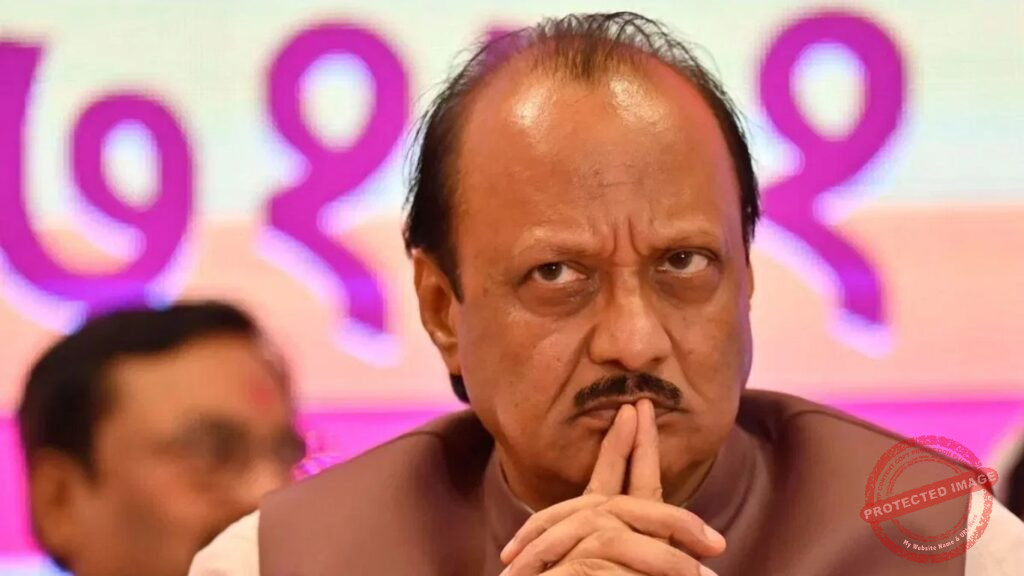
Ajit Pawar
In the 2025 Bihar Assembly elections, the NCP (Ajit Pawar faction) suffered major losses with 13 out of 15 candidates at risk of forfeiting their deposit due to extremely low vote counts. Read full results and implications.
Massive setback for Ajit Pawar’s Nationalist Congress Party in the Bihar Assembly Election 2025 as early trends show the party performing far below expectations. Out of the 15 candidates fielded by the party, 13 are likely to lose their deposits after securing extremely low vote counts in their respective constituencies. According to election rules, candidates must secure at least one-sixth of the valid votes to retain their deposit, but most NCP candidates struggled to even reach a few hundred votes. In Sonepur, the NCP candidate received only 25 votes, while Raghupur saw 147 votes and Bokhari recorded 127. Nautan registered 43 votes, Pimpra 370, and Manihari 196 — numbers that highlight how difficult the contest has been for the party.
BIHAR, 14 November 2025 – The broader picture shows the NDA sweeping the state with well over 200 seats, leaving very little space for smaller parties trying to expand their base. For the Ajit Pawar-led NCP, this outcome is a major blow to its attempt to gain relevance outside Maharashtra. The party had hoped that contesting independently in Bihar would boost its national presence, but the results suggest that the strategy may have misfired. Political observers note that the party lacked strong local structures, credible candidates and visible alliances — all of which are crucial in a state where politics is deeply rooted in local caste equations, regional leadership and established vote banks.
The poor performance also raises questions about Ajit Pawar’s national political ambitions. As Deputy Chief Minister of Maharashtra, he has attempted to reposition his party as a national contender after the split within the NCP. However, the Bihar results underline that electoral strength in Maharashtra does not automatically translate into other states. Analysts say the party’s messaging did not resonate with Bihar’s electorate, and its ground-level presence was too weak to make any meaningful impact. The results may also influence how political equations unfold back in Maharashtra, where parties closely track national outcomes to assess their positioning and alliances.
For party workers, the numbers are disappointing but also revealing. The results point to a need for deeper grassroots work, stronger local alliances and candidate selection based on region-specific dynamics rather than on national branding. The setback is especially significant because losing deposits on such a large scale affects a party’s credibility and organisational morale. Parties that aspire to expand nationally often face moments like this, which test their strategic maturity and long-term planning.
As counting nears completion, the NCP is expected to review its decision-making process for Bihar and reassess its approach in future state elections. Observers believe that parties aiming for national presence must first invest heavily in booth-level structures, community engagement and local leadership development. Without that groundwork, even well-known political names struggle to influence voter behaviour in unfamiliar territories.
The Bihar election outcome has reaffirmed a political reality: regional parties cannot rely solely on their home-state influence to grow nationally. They must adapt to diverse political landscapes, understand local aspirations and build trust from the ground up. For Ajit Pawar’s NCP, this election serves as a cautionary reminder and a moment for introspection before planning its next national move.
Follow us On Our Social media Handles :
Instagram
Youtube
Facebook
Twitter
Also Read- Pune