Shaktipith Highway Route Finalised: 73 Villages in Kolhapur, 25 in Sangli to Be Connected
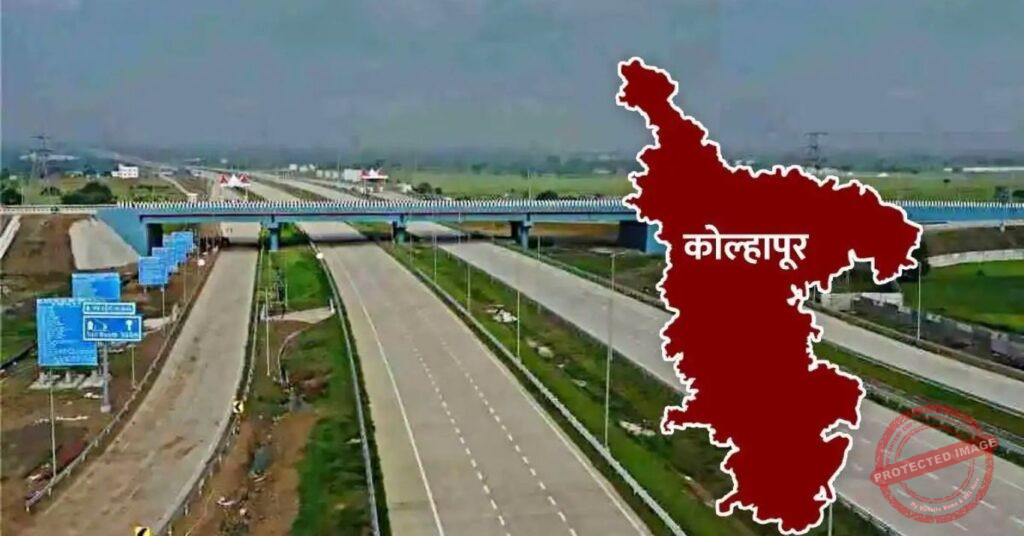
Kolhapur
Shaktipith Highway route finalised connecting 73 villages in Kolhapur and 25 in Sangli, sparking both development hopes and farmer concerns.
April 15, 2026 | Pune: The Maharashtra government has moved a step closer to executing the ambitious Shaktipith Highway project, with the final route now confirmed for parts of western Maharashtra. As per the latest update, the highway will pass through 73 villages in Kolhapur district and 25 villages in Sangli, significantly impacting the region’s infrastructure landscape while also triggering fresh debates among local communities.
The Shaktipith Expressway, also known as the Nagpur–Goa Expressway, is one of the state’s most ambitious infrastructure projects, aimed at connecting central Maharashtra to the Konkan coast through a high-speed corridor. Stretching over 850+ kilometres across 13 districts, the expressway is expected to dramatically reduce travel time between Nagpur and Goa, while boosting connectivity to economic hubs.
With the final alignment now clearer in Kolhapur and Sangli, the project is entering a crucial phase of land acquisition and planning. According to officials, the revised route has been designed to improve connectivity while attempting to address earlier concerns raised by farmers and local stakeholders. However, the inclusion of dozens of villages in both districts indicates that a significant portion of agricultural land may be affected.
In Kolhapur district, the highway will pass through 73 villages, many of which fall in agriculturally rich zones. Similarly, 25 villages in Sangli will be connected under the new alignment. While authorities claim that this will open up opportunities for regional development, logistics, and tourism, local farmers have expressed strong concerns over land acquisition, compensation, and potential displacement.
The project has already seen multiple revisions over the past two years due to widespread protests, particularly from farmers in western Maharashtra. Concerns over fertile land loss, rehabilitation, and lack of adequate consultation have led to resistance in districts like Kolhapur and Sangli. In response, the government revised the route and included areas like Satara to balance the alignment and reduce impact in certain regions.
Despite these changes, opposition has not entirely subsided. Farmer groups argue that even the revised alignment continues to pass through productive farmland, threatening livelihoods and local ecosystems. On the other hand, supporters of the project highlight its potential to transform regional connectivity, reduce logistics costs, and boost economic activity along the corridor.
The Shaktipith Highway is also expected to connect several important pilgrimage sites across Maharashtra, making it a key project not just for infrastructure but also for religious tourism. Authorities believe that improved road connectivity could lead to increased footfall at major temples and stimulate local economies in rural areas.
From a broader perspective, the highway is part of Maharashtra’s larger push towards mega infrastructure projects, similar to the Samruddhi Expressway. If completed as planned, it could significantly cut travel time between key regions, improve freight movement, and create new growth corridors.
Follow us On Our Social media Handles :
Instagram
Youtube
Facebook
Twitter
Also Read- Pune