Mumbai Metro Network Crosses 100 km Mark with Launch of Metro-2B and Metro-9
Mumbai Metro
With the inauguration of new metro corridors, Mumbai’s operational metro network has surpassed 100 km, significantly strengthening urban connectivity and boosting public transport capacity across the metropolitan region.
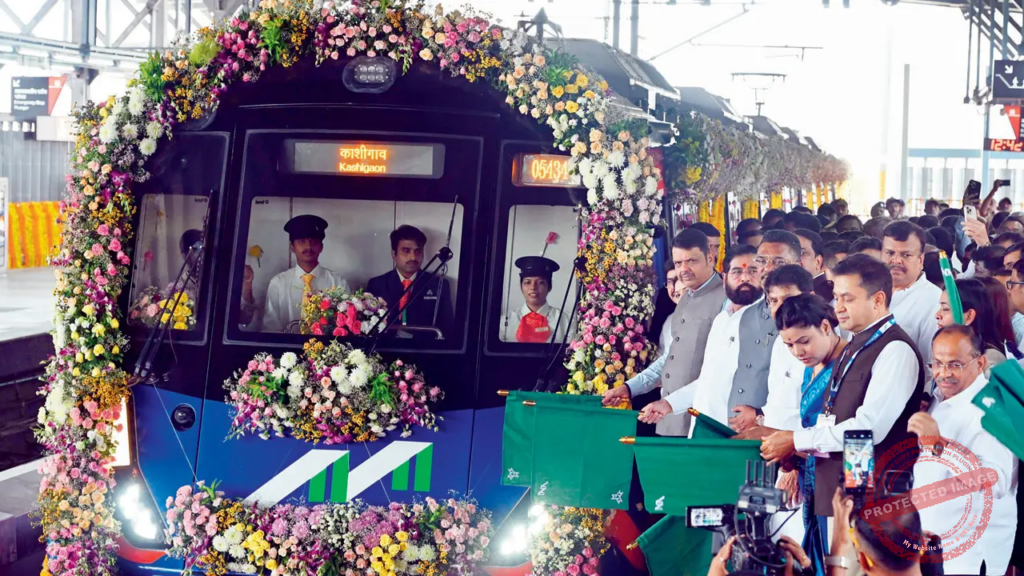
Mumbai | April 8, 2026: Mumbai’s urban transport infrastructure achieved a major milestone as the total operational metro network crossed the 100-km mark following the launch of new corridors. Chief Minister Devendra Fadnavis inaugurated the first phase of Metro Line 2B and Metro Line 9 in the presence of Deputy Chief Minister Eknath Shinde and other senior leaders.
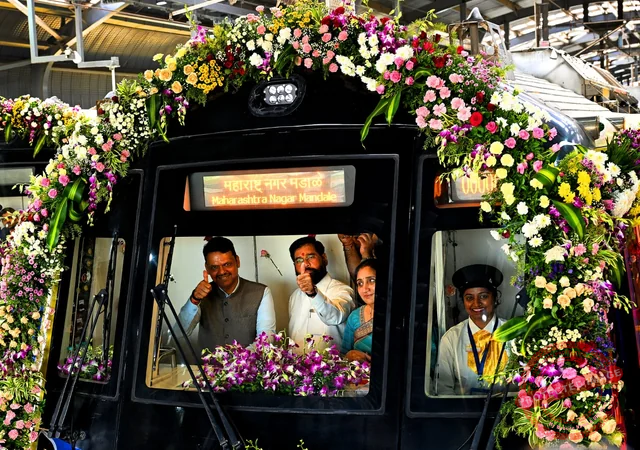
The newly opened stretches include the Diamond Garden to Mandale section of Metro-2B and the Dahisar to Kashigaon stretch of Metro-9. With these additions, the total length of operational metro lines in the Mumbai Metropolitan Region has reached approximately 101.4 km, marking a significant leap in the city’s public transport network.
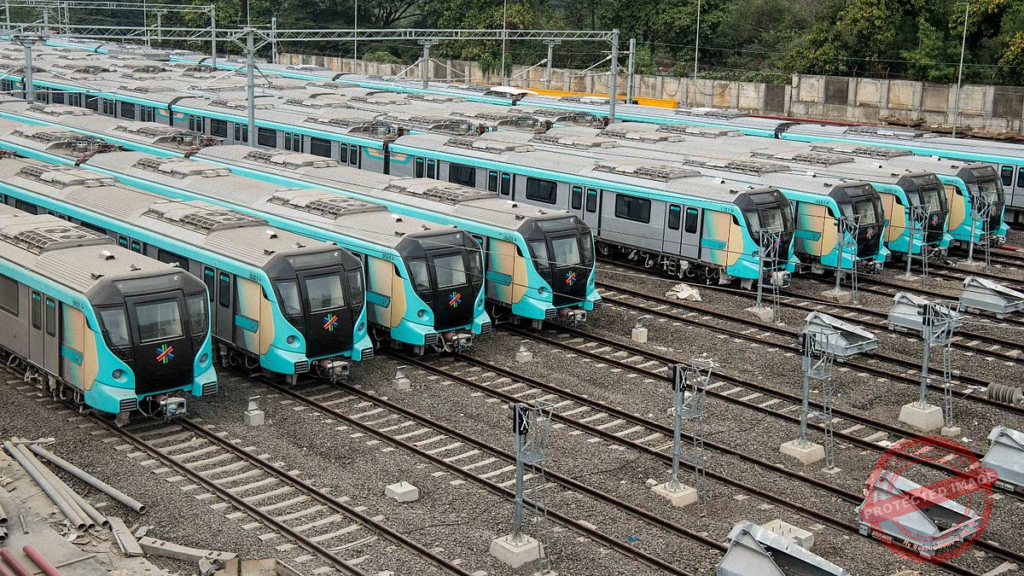
Officials highlighted that Metro-2B is the first metro corridor aligned along the harbour line, with Mandale housing one of the country’s largest metro depots. The facility is designed to accommodate up to 72 metro trains simultaneously, underscoring the scale of infrastructure being developed to support future expansion.
The metro network is expected to play a transformative role in urban mobility. While suburban railways currently carry around 10 million passengers daily, the metro system has the potential to handle up to 7 million passengers per day in the coming years. Authorities believe this will help ease congestion on roads and reduce dependence on overcrowded local trains.
Existing operational corridors such as Metro Line 1 (Versova-Andheri-Ghatkopar), Metro Line 2A (Dahisar to DN Nagar), and Metro Line 7 (Andheri East to Dahisar East), along with the partially operational underground Metro Line 3, have already strengthened connectivity across key parts of the city. The addition of Metro-2B and Metro-9 further enhances east-west and north-south connectivity.
According to the , once the entire network is completed, commuters will be able to travel from one end of the Mumbai Metropolitan Region to the other in under an hour-estimated at around 59 minutes. This is expected to significantly improve daily commuting efficiency and position Mumbai among the most accessible metropolitan cities in India.
In parallel with metro expansion, the government has also initiated new urban mobility projects. A pod taxi system has been proposed along the Bandra-Kurla Complex (BKC) corridor, aimed at improving last-mile connectivity. The project, spanning approximately 8.85 km with 22 stations, will use driverless, battery-operated pods capable of carrying up to six passengers at a time.
The pod taxi system is expected to operate at speeds of up to 40 kmph, with short intervals between vehicles, ensuring high-frequency service. The first phase of the project will cover key commercial and transit hubs, with completion targeted by 2031. Authorities estimate that the system will serve around 100,000 passengers daily once fully operational.
Officials also pointed to complementary infrastructure developments, including tunnel projects and coastal road connectivity, aimed at creating seamless integration across different transport modes. These initiatives are part of a broader vision to establish a comprehensive, multi-modal transport network for the Mumbai Metropolitan Region.
The crossing of the 100-km milestone marks a crucial step in Mumbai’s journey towards modern, efficient, and sustainable urban mobility, with further expansions expected to accelerate in the coming years.
Follow us On Our Social media Handles :
Instagram
Youtube
Facebook
Twitter
Also Read- Pune