272 eminent citizens condemn Congress over allegations against Election Commission, call remarks irresponsible
272 eminent citizens condemn Congress over allegations against Election Commission, call remarks irresponsible
A group of 272 former judges, bureaucrats, diplomats and military officers has issued an open letter criticising the Congress party and Rahul Gandhi for making unproven claims about vote fraud and undermining trust in the Election Commission.
New Delhi, India | Nov 19, 2025 – : A collective of 272 respected citizens from across the country has issued an open letter expressing concern over the Congress party’s recent statements accusing the Election Commission of large-scale irregularities. The signatories include 16 retired judges, 123 former bureaucrats, 14 ex-ambassadors and 133 former armed forces officers. They argue that repeated references to “vote theft” without concrete evidence risk weakening public confidence in institutions that form the backbone of India’s democratic system.
The letter states that criticism of institutions is legitimate, but only when supported by facts. According to the group, leaders cannot repeatedly cast doubt on the electoral process based on assumption or political frustration. They believe such remarks create distrust among voters and weaken the credibility of constitutional bodies. The signatories also point out that the tone and language used in recent political statements go beyond healthy democratic questioning and instead contribute to an atmosphere of cynicism.
The citizens who signed the letter—many of whom previously held influential positions in the judiciary, civil service, foreign services and defence—said they felt compelled to speak up because the stability of democracy depends on respecting institutional frameworks. While they acknowledged that no institution is above scrutiny, they insisted that criticism should be constructive, measured and backed by verifiable data. They warned that without careful restraint from political leaders, public discourse may drift toward confrontation rather than accountability.
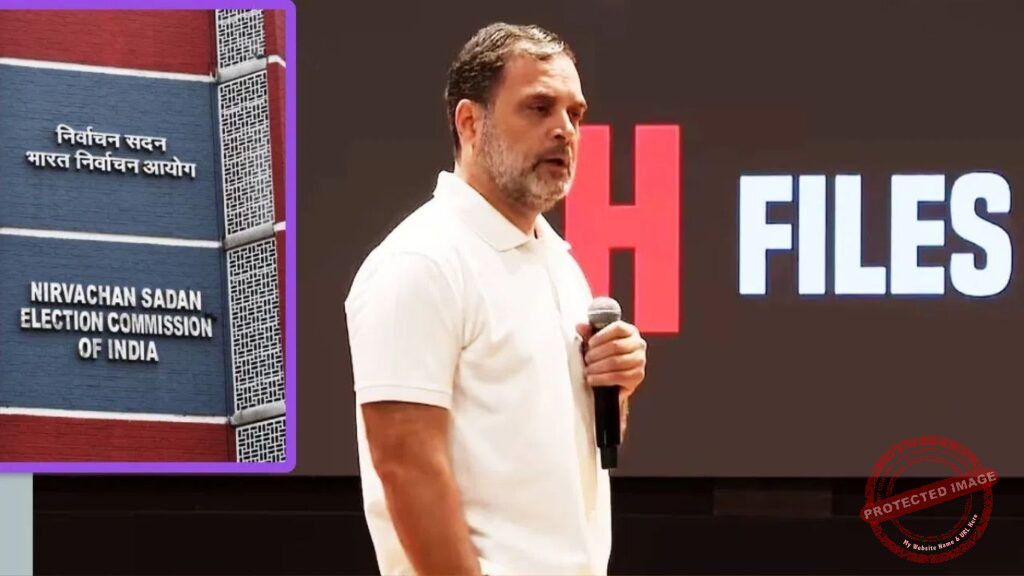
According to reports, the letter was prompted by comments made by Rahul Gandhi and other Congress leaders following electoral setbacks. Their statements suggested deliberate manipulation of the voting process, but the signatories said such claims lacked supporting proof. They wrote that undermining the Election Commission could have long-lasting effects by creating confusion among citizens who rely on these institutions to ensure free and fair elections.
Political analysts say the timing of the letter is notable. The general election cycle has only recently concluded, and opposition parties have been demanding inquiries into various alleged irregularities. The letter shifts the conversation toward responsibility in public communication, reminding political figures that their words influence national sentiment. Observers believe the intervention by such a large group of former officials may encourage more restraint in political commentary going forward.
Some opposition voices have criticised the letter, arguing that raising concerns about election procedures is within their rights. They say that protecting democratic values also involves demanding transparency from institutions, especially when doubts arise. However, supporters of the letter believe that open accusations made without evidence only serve to polarise public debate.
The issue has drawn considerable attention because of the stature of the individuals who have signed the letter. Many of them have spent decades in public service and argue that the country’s institutions are constantly tested and strengthened through oversight, internal checks and legal mechanisms. They emphasise that attacking them without credible basis risks weakening the very safeguards that protect citizens’ rights.
The coming weeks will show whether the letter influences the tone of political dialogue or prompts further debate. For now, it stands as a clear appeal from experienced voices urging political leaders to choose responsibility over rhetoric and to safeguard the trust that keeps the democratic process functioning.