Supreme Court Flags PILs as Turning into ‘Private, Political, and Money Interest Litigation’

Supreme
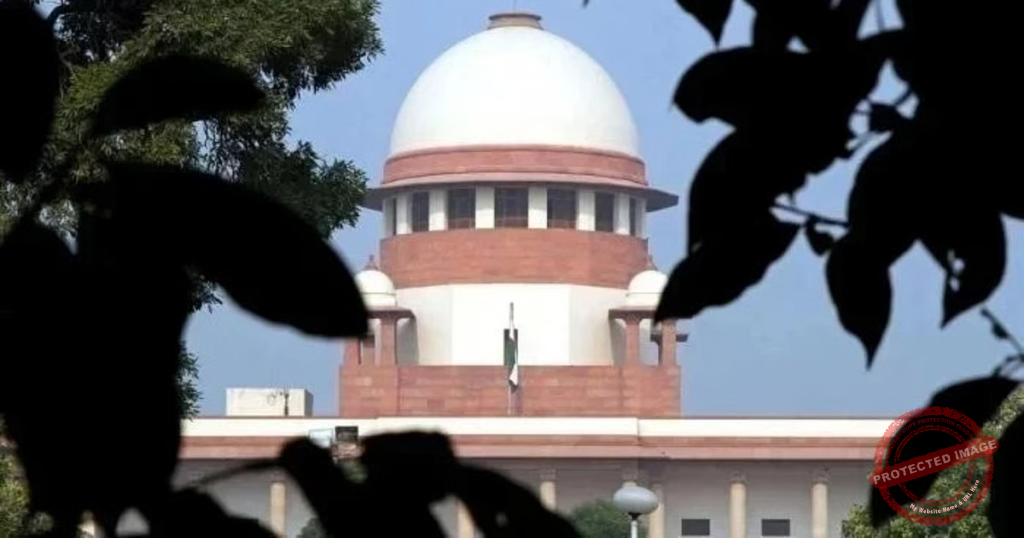
Supreme Court criticised misuse of Public Interest Litigations, calling them “private, political and money interest cases” while hearing petitions on Sabarimala temple issue and questioning intent of petitioners.
New Delhi| 05 May 2026: The Supreme Court has strongly observed that Public Interest Litigations, originally meant to serve collective public welfare, are increasingly being misused and are now turning into what it termed “private interest litigation,” “publicity interest litigation,” “money interest litigation,” and “political interest litigation.” The remarks were made by a Constitution Bench during ongoing hearings related to petitions concerning religious freedom and gender-based entry restrictions in places of worship, including the Sabarimala temple matter.

A nine-judge Constitution Bench, comprising the Chief Justice of India and several senior judges including Justice B.V. Nagarathna, Justice M.M. Sundresh, Justice Ahsonuddin Amanullah, Justice Arvind Kumar, Justice Augustine George Masih, Justice Prasanna B. Varale, Justice R. Mahadevan and Justice N. K. Bagchi, is examining broader constitutional questions linked to religious practices and equality.During the proceedings, the bench questioned the intent behind the petition filed by the Indian Young Lawyers Association, which had challenged restrictions on women’s entry into the Sabarimala temple. The court observed that such petitions must clearly demonstrate genuine public interest rather than reflect individual or organisational agendas.
At one stage, the bench remarked that the petition appeared to be an abuse of the judicial process and questioned whether the petitioners were acting as “chief priests of the country,” highlighting concerns over attempts to redefine or interfere with established religious practices through litigation. The judges emphasised that while constitutional rights are paramount, the judiciary cannot be used as a platform for ideological or advocacy-driven interventions without proper standing or public cause.
The petition in question traces its origin to arguments based on media reports published in 2006, according to submissions made by counsel representing the association. The court, however, scrutinised whether such material was sufficient to justify sustained constitutional litigation of this nature.
The bench also noted that an earlier five-judge Constitution Bench in 2018 had lifted the restriction on women aged 10 to 50 entering the Sabarimala temple, a decision that continues to be legally and socially debated through multiple review petitions and related cases.The observations reflect the court’s growing concern over the proliferation of PILs that may not align with their original intent of addressing genuine public grievances, and underline the need for stricter scrutiny of such petitions before they proceed for full adjudication.
Follow us On Our Social media Handles :
Instagram
Youtube
Facebook
Twitter
Also Read- Pune