Navi Mumbai International Airport to Create 2 Lakh Jobs, Pushing City Among Global Aviation Hubs
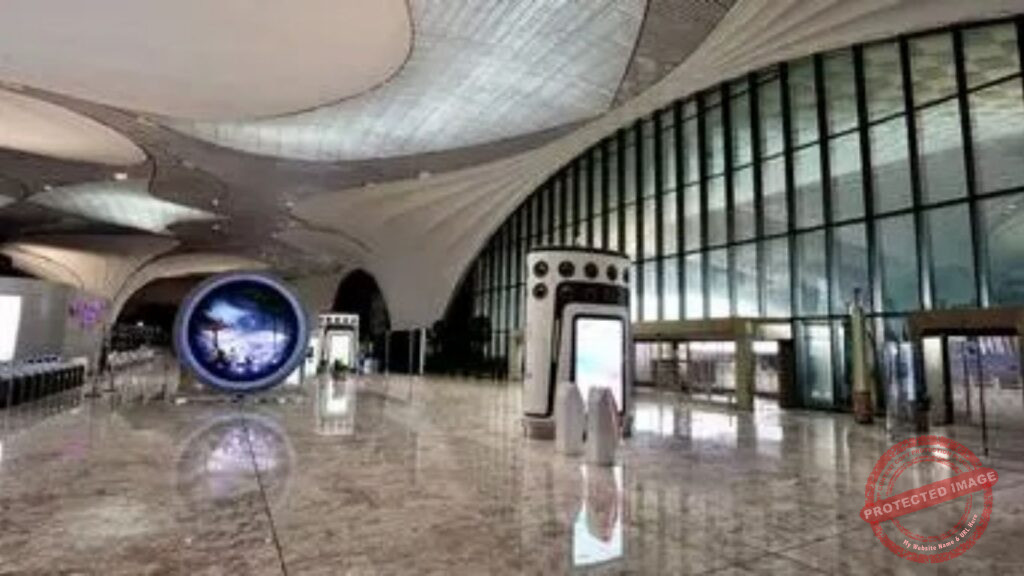
Navi Mumbai International Airport to open in 2025, creating over 2 lakh jobs and positioning Mumbai among global twin-airport hubs.
Pune, October 06, 2025: The upcoming Navi Mumbai International Airport (NMIA) is poised to transform the economic and aviation landscape of Maharashtra. Set to be inaugurated on October 8, 2025, the project spans over 1,160 hectares and is designed as a world-class, eco-friendly aviation hub that reflects Indian culture and sustainability.
In its first phase, NMIA will feature one runway and one terminal, capable of handling 20 million passengers annually. Once fully operational, the airport will expand to two parallel runways and four passenger terminals, increasing the combined capacity of Mumbai’s dual-airport system to an impressive 155 million passengers per year.
Beyond passenger capacity, NMIA is envisioned as a major employment generator, expected to create more than 2 lakh direct and indirect jobs across aviation, logistics, real estate, hospitality, and information technology sectors. This development is set to position Navi Mumbai alongside global twin-airport cities such as London, New York, and Tokyo, redefining India’s place in international aviation.
Industry experts highlight that the airport’s strategic location — close to the Mumbai–Pune Expressway and the upcoming Mumbai Trans-Harbour Link — will enhance regional connectivity and decongest the existing airport infrastructure. The project is also integrating AI-driven cargo handling systems, aiming to raise annual cargo movement from half a million tonnes to over three million tonnes in its advanced stages.
India’s aviation sector, already one of the world’s fastest-growing, is on a trajectory of massive expansion. The number of operational airports nationwide has surged from 74 to over 160 in the last decade. Passenger traffic is projected to double to 500 million by 2030, while air cargo volume could triple to 10 million tonnes during the same period. These milestones underline India’s growing demand for advanced aviation infrastructure, and NMIA stands at the center of that transformation.
The airport’s design draws inspiration from the lotus flower, symbolizing purity and progress, while incorporating cutting-edge sustainability features such as rainwater harvesting, solar power generation, and advanced waste management systems. This approach aligns with India’s broader goal of reducing carbon emissions in the transportation sector.
With construction nearing completion and commercial operations expected to begin next year, the project has already sparked real estate growth across Navi Mumbai, Panvel, Ulwe, and surrounding areas. Analysts predict that the airport will not only serve as a transport hub but also as a catalyst for urban development, innovation parks, and tourism.
Follow us On Our Social media Handles :
Instagram
Youtube
Facebook
Twitter