Blue Aadhaar Card: Everything You Need to Know About Who Can Get It and Its Benefits
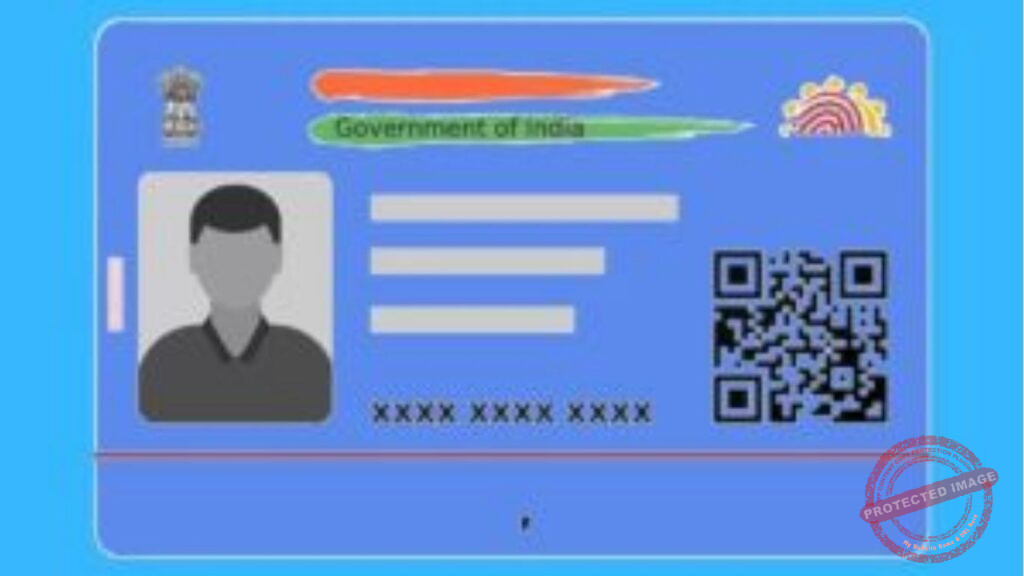
Discover what the Blue Aadhaar card (Baal Aadhaar) is, who is eligible, how to apply, its benefits and what happens when the child turns five.
Pune | November17 ,2025: The Blue Aadhaar card, also known as the “Baal Aadhaar”, is a special version of the standard Aadhaar identity document issued by the Unique Identification Authority of India (UIDAI) for children under the age of five. Unlike the regular white-coloured Aadhaar card issued to adults, this Blue Aadhaar letter or card is designed to ensure that even very young children have a unique identity number linked to their parent or guardian, but without full biometric data. The reason for this arrangement is that biometric features such as fingerprints and iris patterns are not stable in children under five, so the card is generated based on demographic information, a photograph, and linkage to a parent’s Aadhaar number.
Eligibility for the Blue Aadhaar card is straightforward: any resident child in India below five years of age can be enrolled, provided a parent or legal guardian brings along their Aadhaar and the child’s proof of date of birth (such as a birth certificate) to an Aadhaar enrolment centre. The parent’s Aadhaar number is used to link the child’s number, ensuring continuity in identity. No biometric data (finger-print or iris scan) is taken for the child at this stage.
One of the key benefits of obtaining a Blue Aadhaar card early is that it gives the child a recognised identification number and helps in accessing various services — this includes school admissions, welfare schemes, scholarships, and other benefits where child identity and proof of relationship to guardians often matter. It also helps establish a formal identity for the child from a young age and prevents delays or administrative issues later.
However, parents and guardians should note that while the Blue Aadhaar is issued for children under five, it is not the final biometric enrolment. When the child turns five years old, they must update their Aadhaar with biometric details (fingerprints, iris scan and photograph) at an Aadhaar centre. Another update is required at age 15. Failing to update the biometric information may result in the Aadhaar becoming dormant or invalid for certain services.
The application process is both online (for appointment booking) and offline (at enrolment centres). Parents must schedule an appointment, bring relevant documents (child’s birth certificate, parent’s Aadhaar and address proof), fill out the enrolment form, and have a photograph of the child taken. Once submitted and processed, the Blue Aadhaar letter or card is typically dispatched within about 60–90 days.
In terms of costs, enrolment for children under five is free, just as regular Aadhaar enrolment is free for residents. It’s essential for parents to update details if there are changes in address or other demographic information before the child’s biometric update at five. Also, while the Blue Aadhaar offers advantages, parents must ensure they complete the biometric update in time to preserve the validity of the ID.
From a broader perspective, the Blue Aadhaar initiative strengthens the nationwide identity-framework by ensuring that even the youngest residents are included in the system, which supports effective delivery of subsidies, benefits and services. It also offers parents peace of mind that their child has a unique ID, which simplifies formal processes and documentation later on.
In conclusion, if you have a child under five, applying for the Blue Aadhaar card is advisable. It gives them a recognised identity early on, helps in accessing services and lays the groundwork for smooth updates when the child turns five and beyond. Parents should ensure all documents are ready, enrol promptly, and keep track of the biometric update requirement to avoid issues.
Follow us On Our Social media Handles :
Instagram
Youtube
Facebook
Twitter
Also Read- Pune